 Priority Model
Definition
The priority model is a group of entities that affect the total priority (importance) of a task , the extent of their impact being determined by the entities’ weighting factors and priority values.
Use
The priority model determines the total priorities of tasks at both the task creation and task selection stages.
You can influence task priorities by doing the following:
Using the Mode Maintenance tool from the TRM Monitor to maintain priority modes and their weighting factors
Using Monitor Methods to set priority values
Using Monitor methods to increase or decrease the total priority of a task as calculated by the system
Structure
The priority model comprises of two separate hierarchies: One for task creation and one for task selection.
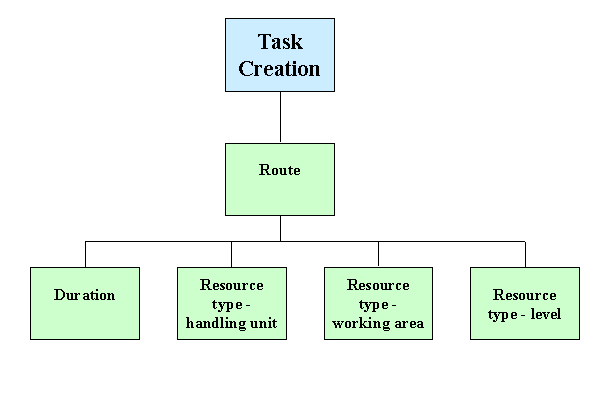
Entity Name |
Description |
Priority Value Determination |
Route |
||
Duration |
Takes into account the following:
The shorter the period of time, the higher the priority. |
System |
Resource type – handling unit |
Takes into account the preference of a resource type to carry a specific handling unit |
User input via
For more information, see Monitor Methods . |
Resource type – working area |
Takes into account the preference of a resource type to work in a specific working area |
|
Resource type - level |
Takes into account the preference of a resource type to work in a specific level |
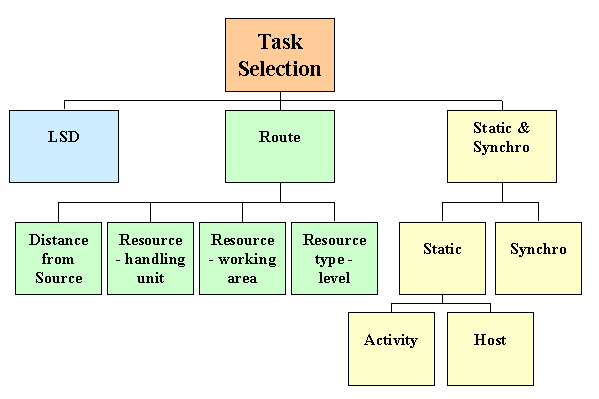
Entity Name |
Description |
Priority Value Determination |
Latest Starting Date (LSD) |
A priority that increases linearly from 0 to 99 during the task Critical Time Window. For more information, see Latest Starting Date . |
System. Critical Time Window is set in Customization for
|
Route |
||
Distance from Source |
Takes into account the current position of the resource in relation to the source of the task |
System |
Resource – handling unit |
Takes into account the preference of a resource to carry a specific handling unit |
Influenced by user input via
For information on these methods, see: |
Resource – working area |
Takes into account the preference of a resource to work in a specific working area |
|
Resource type - level |
Takes into account the preference of a resource type to work in a specific level |
|
Static & Synchronization |
||
Static |
||
Host |
Reflects the importance of the originating instruction from the host vis-a-vis other host instructions.
|
Host |
Activity |
Reflects the importance of a particular activity vis-a-vis other activities.
|
User input via
For more information, see Monitor Methods . |
Synchronization |
Takes into account the relationship between related tasks. For more information, see Task Synchronization . |
System |


