 Portal Content Studio Interface
The Portal Content Studio provides all the tools for creating and building portal content in a single interface.
Structure
The Portal Content Studio interface consists of the following parts:
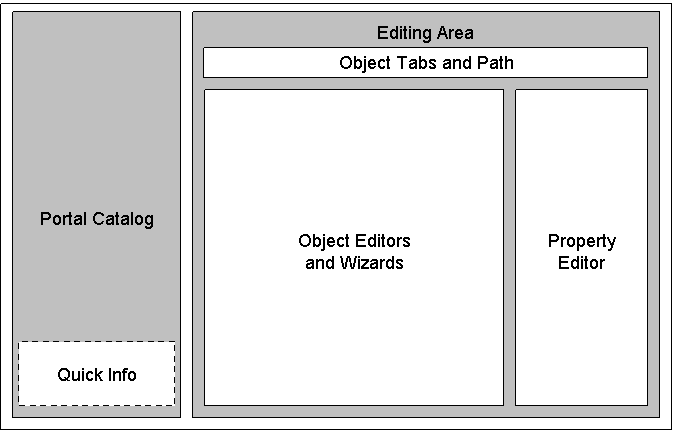
Wireframe schematic of the Portal Content Studio interface
Each part of the Portal Content Studio interface is dedicated to a particular function:
Portal Catalog |
Provides a centralized access point to portal content stored in the portal content directory (PCD) and the ability to manage the content in a structured hierarchy:
The Portal Catalog does not display child objects that are assigned to other content objects; for example, iViews assigned to a page, or pages assigned to a role. To view these objects, you need to open the parent object in its respective editor; for example open a role in the Role Editor to view the iViews, page and worksets assigned to it. End of the note. For more information, see Portal Catalog. |
Editing Area |
The area of the Portal Content Studio containing the tools that enable you to create and maintain content. |
Object Tabs and Path |
The Portal Content Studio enables you to edit multiple Portal Catalog objects at the same time. The object tabs and path enable you to toggle between objects you are editing concurrently:
|
Object Editors and Wizards |
The area that displays the wizards for creating portal content and the editors and tools used for maintaining content. For more information, see Object Editors & Wizards in the Portal Content Studio. |
Property Editor |
The area used by some editors in the Portal Content Studio for viewing and editing the properties and attributes of certain content objects. The properties displayed in the Property Editor relate to the object currently in focus in the object editor area. For more information, see Property Editor. |
 Note
Note Recommendation
To maximize the editing area of the Portal Content Studio, you can collapse the navigation panel. To do so, click the resizing arrows at the top of the navigation panel.
You can adjust the height of the Portal Catalog and Quick Info areas by dragging the horizontal separator between the Quick Info area and the Portal Catalog.
You can also adjust the width of the Portal Catalog by clicking the resizing arrows at the top of the Portal Catalog.