 Creating HTML Templates With the Template Wizard

Creating HTML Templates With the Template Wizard
Use
You use this procedure to create
HTML templates with the template wizard.
If you are developing screen-dependent applications based on Web Transactions, it is best to create HTML templates with the template wizard, but you can also
If you are developing screen-independent applications based on ITS Flow Logic, you must
create HTML templates manually.Prerequisites
There must be a user in the R/3 System which your service is using.
You must
create a service file first.Procedure
To create an HTML template using the template wizard:
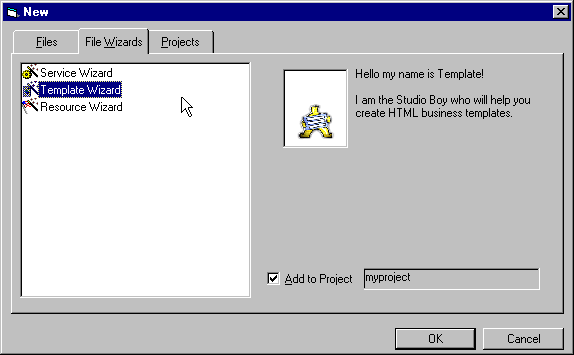
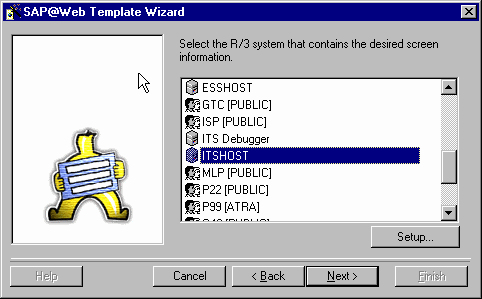
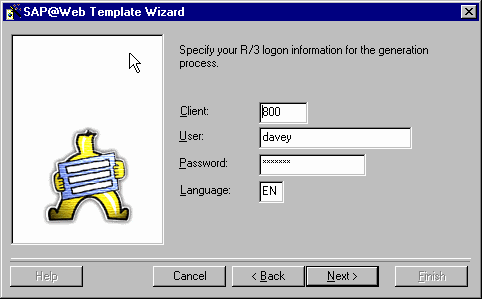
Logon information includes the client, user name, password, and logon language.
If you define service-specific logon information, remember that the language key must be:
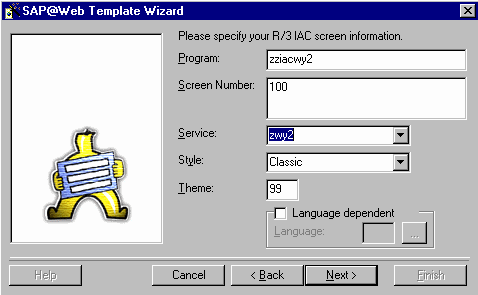
Enter values in the fields as described in the following table:
Field |
Value |
Program |
Program name of R/3 transaction. |
Screen Number |
Screen number of program. |
Service |
The SAP@Web Studio proposes the current service. |
Style |
Template style. There are four possible template styles: The style you choose depends on the type of application you are developing. When you select a style, a description of the main features is displayed on the left. |
Theme |
The SAP@Web Studio proposes the default theme 99 .Unless you intend to create more than one theme for your service, or you want to change the name for some other reason, leave the theme unchanged. |
Language dependent |
|
Result
The SAP@Web Studio creates the HTML template and displays it in the Workspace – Project View under the current service and theme (if applicable).
The format of the file name depends whether you have created a language-independent template or a language-specific HTML template:
HTML Template |
File Format |
Language-independent |
<program name>_<screen number>.html |
Language-specific |
<program name>_<screen number>_<language>.html |
If you want to keep the HTML template language-independent,
create a language resource.