Calculation of Projected Sales
Use
Projected sales is the result of comparing the sales history (received in the data import controller) and the forecast values of the previous short-term forecast sub-periods in the overall forecast period; that is, if the overall forecast period is a week, and today is Wednesday, you the need the forecast from Monday and Tuesday. The result is used to calculate the projected sales for the remaining short-term forecast period. The projected sales is based on the following key figures:
History
Forecast
In the short-term, sales are more reliable than the forecast.
The projected sales is always calculated for baseline products. The forecast period could be a day, a week, or a month.
Features
Once the system has disaggregated the forecast into daily (or subdaily) values, it calculates the projected sales for the location product in the following way:
The system calculates the ratio of the cumulative sales and cumulative forecast.
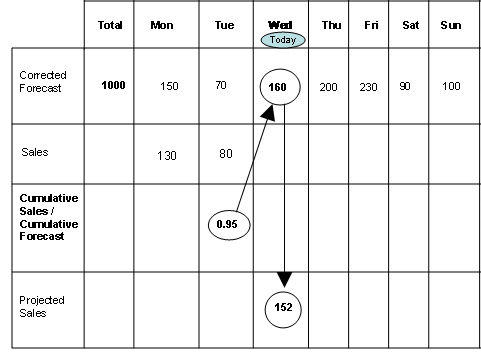
In the example below, the cumulative sales is 210 (130 + 80), and the cumulative forecast is 220(150 + 70). So, to calculate the cumulative forecast and cumulative sales ratio, divide 210 by 220 which equals 0.95.
Starting with the current short-term forecasting period, the system multiplies the ratio calculated above with the corrected forecast of the short-term forecasting period.
In the example below, 0.95 is multiplied by 160, which equals 160 for the
Corrected Forecast
key figure.The system determines if the key figure
Forecast or Projected Sales
displays the value from theCorrected Forecast
key figure or from theProjected Sales
key figures.For more information on this process and the key figure
Forecast or Projected Sales
see Key Figures in Short-Term Forecasting .
Example
The following figure is an example of how projected sales is calculated: