Scheduling Type
Controls the calculation of the planned dates in the service interval. The following scheduling types are supported:
Cyclical Scheduling
The service is repeated at fixed intervals. The next planned date is determined based on the last planned date and the service interval.
 Example
The service plan car inspection
is cyclical, based on time intervals.
An inspection is entered in service interval 10. This should take place annually. Based on either the start of the service plan or the date on which the inspection was carried out, the system calculates the new planned date and creates a corresponding service order for this date.

One-Time Scheduling
The service is not repeated cyclically, but is rather carried out after a prescribed service interval has passed. Each service interval is taken into account only once for the scheduling. Scheduling is not carried out on the basis of the last planned date, but rather on the basis of the start of the planning. It ends automatically with the end of the last service interval.
Example
The service plan photocopier maintenance
is a one-time service, based on counter readings.
The cleaning of the photocopier, which should take place after 10,000 copies have been made, is entered in service interval 10.
The replacement of the heating unit is entered in service interval 20. This should take place after 200,000 copies have been made.
After the relevant counter readings have been reached, an appropriate service order is created. The photocopier can still be used until it is serviced.
Scheduling with Fixed Values
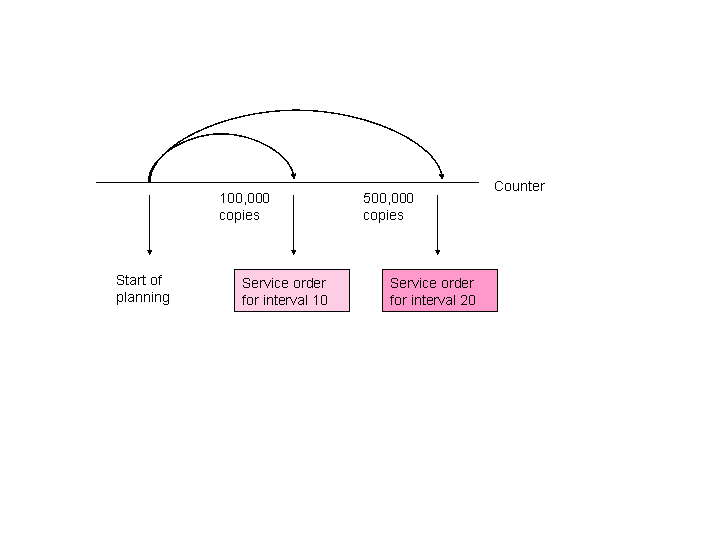
Scheduling takes place in the same way as one-time scheduling, with the difference being that in the case of scheduling with fixed values, the planned date is not calculated on the basis of an interval, but rather on the basis of predefined fixed values.
Example
As in the case of the one-time scheduling example above, a service order is created when the counter reading in question is reached. The photocopier can be used again only after it has been serviced.
Alternating Scheduling
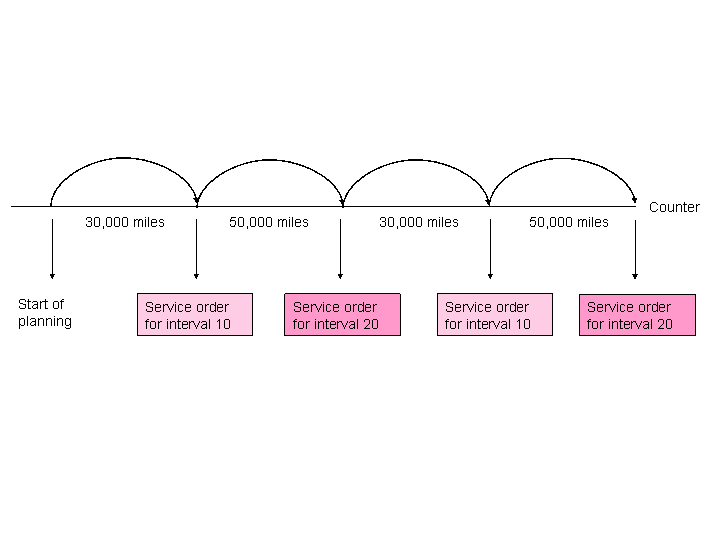
Scheduling takes place in the same way as the one-time scheduling, with the difference being that in the case of alternating scheduling, the different service intervals are completed one after the other. After the last interval has been completed, the cycle starts again with the first interval.
Example
The service plan inspection
is alternating, based on counter readings.
An oil and brakes check is entered in service interval 10. This should take place when the vehicle was driven 30,000 miles.
A major inspection is entered in service interval 20. This should take place when the vehicle was driven 50,000 miles.
The inspections should take place alternately.