Condition Type
Conditions are identification characteristics that can be freely defined in Customizing to specify condition categories according to their business requirements.
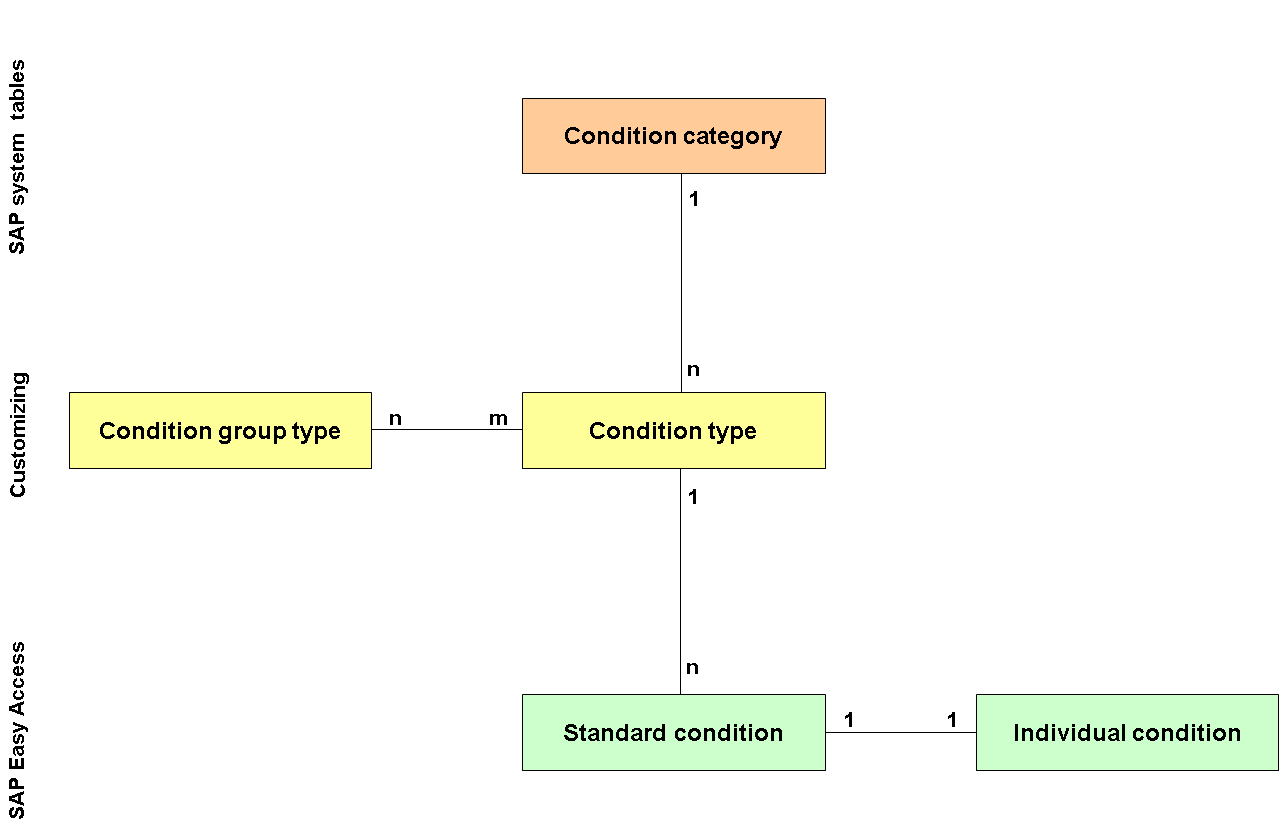
Condition types form the basis for the definition of conditions in the application. They are grouped in condition group types.
When you define a condition type, you assign a condition category to the condition type. The condition type then inherits the properties of the condition category, such as the amount, date, and differentiation categories. A condition type can have the following properties:
A maximum of one amount category
Multiple date categories, but no more than specified by the condition category
A maximum of five differentiation categories
In the condition type, you also make the following settings:
Screen sequence
FIMA calculation category
Additional application-specific settings that determine the exact calculation, the characteristics, and business meaning of a condition that is based on the condition type.
The following table shows the permitted combinations of individual condition categories with amount categories, date categories, and screen sequences:
Combination of condition category, amount category and screen sequence
Condition Category |
Amount Category |
Screen Sequence |
105010 Nominal Interest |
105010 Nominal Interest |
105012 Variable Interest 105013 Variable Interest (CAP) 105014 Variable Interest (FLOOR) |
105020 Settlement Interest |
105020 Debit Interest 105030 Credit Interest 105040 Overdraft Interest |
105021 Debit Interest 105022 Credit Interest 105023 Overdraft Interest |
105040 Interest Penalty |
105060 Interest Penalty |
105025 Interest Penalty |
105050 Bonus |
105030 Credit Interest |
105022 Credit Interest |
105080 Event Interest |
105080 Event Interest |
105080 Event Interest |
105090 Interest Reimbursement |
105090 Interest Reimbursement |
105091 Interest Reimbursement |
110010 Repayment (Not Amount-Based) |
110010 Final Repayment 110040 Repayment Cap. Interest |
110010 Final Repayment 110023 Repayment Cap. Interest |
110020 Repayment (Amount-Based) |
110020 Installment Repayment 110030 Annuity Repayment |
110021 Installment Repayment 110022 Annuity Repayment |
115010 Settlement Charges |
115010 Fixed Amount 115020 Item Charge 115030 Dispatch Expenses 115060 Pro Rata Amount |
115011 Fixed Amount 115012 Item Charge 115013 Dispatch Expenses 115014 Pro Rata Amount |
115020 Event-Controlled Condition |
115010 Fixed Amount |
115011 Fixed Amount |
115021 Event-Controlled Settlement Charge |
115010 Fixed Amount |
115011 Fixed Amount |
115030 Transaction Charge |
115050 Charge on Amount |
115021 Charge on Amount |
115070 Early Withdrawal Penalty |
115070 Early Withdrawal Penalty |
115070 Early Withdrawal Penalty |
120010 Similar Interest Amounts |
120010 Similar Interest Amounts |
120010 Similar Interest Amounts |
150010 Bundle Pricing Charge |
150010 Bundle Pricing Charge 150020 Flexible Bundle Pricing Charge |
150010 Bundle Pricing Charge 150020 Flexible Bundle Pricing Charge |
180000 Amount Limits |
180000 Amount Limits |
180011 Amount Limits |
180001 Amount Limits with Period of Use |
180000 Amount Limits |
180011 Amount Limits |
185000 Free Items for Each Counter Group |
185000 Free Items for Each Counter Group |
|
700000 Template of Settlement Interest |
105020 Debit Interest 105030 Credit Interest 105040 Overdraft Interest |
|
815010 Non-Contract-Based Charge |
115020 Item Charge |
115012 Item Charge |
Combination of condition category, date category, and screen sequence
Condition Category |
Date Category |
Screen Sequence |
205010 Value Date |
205010 Value Date |
205011 Value Date |
205020 Period 205030 Expiration Date of Prenotes |
205020 Period |
205012 Period |
You can define any number of condition types with any descriptions in addition to the existing ones. Note that the use of the condition category must match the intended use of the condition type.
 Example
If your condition type describes interest calculation in the context of account settlement, you must assign the Settlement Interest condition category. However, you need to at least classify settlement interest into debit, credit, and overdraft interest by defining three different condition types that are all based on the settlement interest condition category.
Integration
The following graphic shows the position of the condition type in the condition model: