Vendor Declaration

Vendor Declaration
Definition
A document issued by a vendor to certify the origin of the vendor's product.
Use
A requirement for aggregating the vendor declaration indicator (and therefore for the whole preference determination process) is that you must know whether an input-material, delivered by a certain vendor, can be treated as originating goods (goods relevant for preference) when it is exported to a particular country. The vendor declaration contains this information. It is generally used as the basis for issuing preference certificates through customs offices.
Typically, vendor declarations are valid for a period of time (usually a year). After that period, you must ask your vendor for an updated copy of the declaration. See
Requesting and Dunning of Expiring Vendor Declarations.Valid Vendor Declarations in the EU
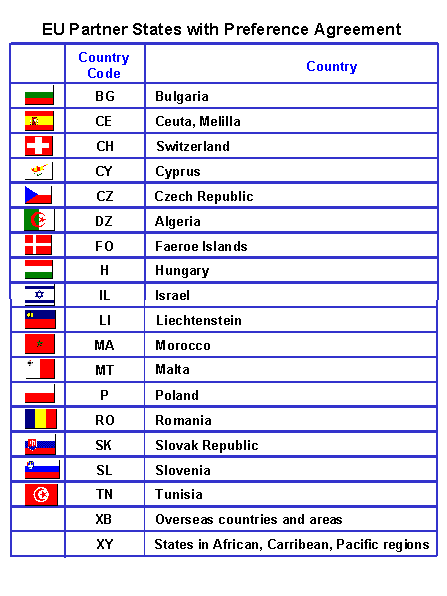
For preference in the EU, the vendor declaration is only valid if the issuer’s company is based in an EU member-state. The goods must be manufactured completely in the EU or a partner state, or they must have been sufficiently processed or enhanced within the EU or a partner state. If the product has not been manufactured within the EU, it requires a preference certificate.
The states in the table below are partner states with a preference agreement with the EU. They are considered when a vendor declaration is being used.