 Condition Table
Definition
If the condition table access is successful, a specific action is executed in the condition technique. In the case of Message Control this action is the proposal of a message found in the condition table.
Structure
A condition table consists of one or more condition keys and a data part:
- The condition keys can be selected according to the data combination for which a message is to be found. The key fields come from the field catalog.
- The data section is dependent on the use of the condition technique (message/price/account determination) and consists of the fields which describe the message. In the case of message determination (that is if the condition table is used by the Message Control) the data part consists of an index for the table message attributes (NACH).
- The message attributes contain, for example, the processing time, the transmission medium and the language. When creating a message (that is to say when creating a corresponding condition record), this data is determined in the application.
The condition records of a condition table describe the values or field contents which lead to a message, as well as the attributes of this message. Depending on the application, the message found is proposed in a business process or forwarded for processing directly.
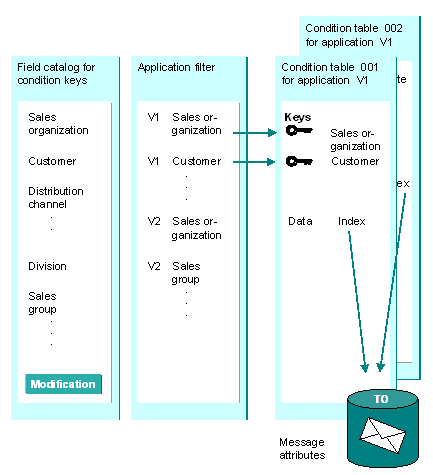

Message Control scenario: Condition keys
- A message is to be generated if the credit limit is exceeded in a sales order. A condition table must therefore be created for which the key is the appropriate lock indicator.
- A message is to be generated if the document status is changed. In this case, a condition table can be used which consists of a key from the status field containing the document information record.
Use
Defining Condition RecordsCondition tables that have already been defined are filled in the application with condition records. SAP delivers several condition tables as standard.
Defining Condition TableNew condition tables can be defined in customizing. Their names are restricted to a customer name range.
Integration
Condition Components: Sample Hierarchy