 Block on Processing Data in Destruction Period
For data privacy reasons, you have destroyed personal data on employees. Data privacy also requires that such data may not be created again or edited retroactively. Therefore, the system automatically blocks the creation, changing, or deletion of data in the period in which the data has been destroyed.
 Example
All absence data for an employee that is older than 3 years is destroyed for data privacy reasons, for example, up to December 31, 2007. For the period up until December 31, 2007, you cannot create any absence data retroactively for this employee.
Prerequisites
You have performed a data destruction session for an employee's data for an archiving object in a defined period.
The checks in the preprocessing phase of the program showed that the criteria for the destruction of data have been met for the selected data for this employee.
The employee's data has the status
Prepared for Data Destruction
orDestroyed
in the infotypeArchiving/Data Destruction
(0283).
Process
For this employee, the system writes a data record with the related destruction date to the infotype
Archiving/Data Destruction
(0283).If you attempt to edit corresponding data for the employee in the destruction period, for example, using the application
Maintain HR Master Data
(transactionPA30
), the system reads the infotype 0283.The system blocks the creation or editing of data for the employee in this period.

Process Flow: Block for Creating Data
Example
For maternity protection or parental leave, you have defined a retention rule that states that the retention period for data of this absence type is 5 years. This means that all data on maternity protection or parental leave that is older than 5 years must be destroyed.
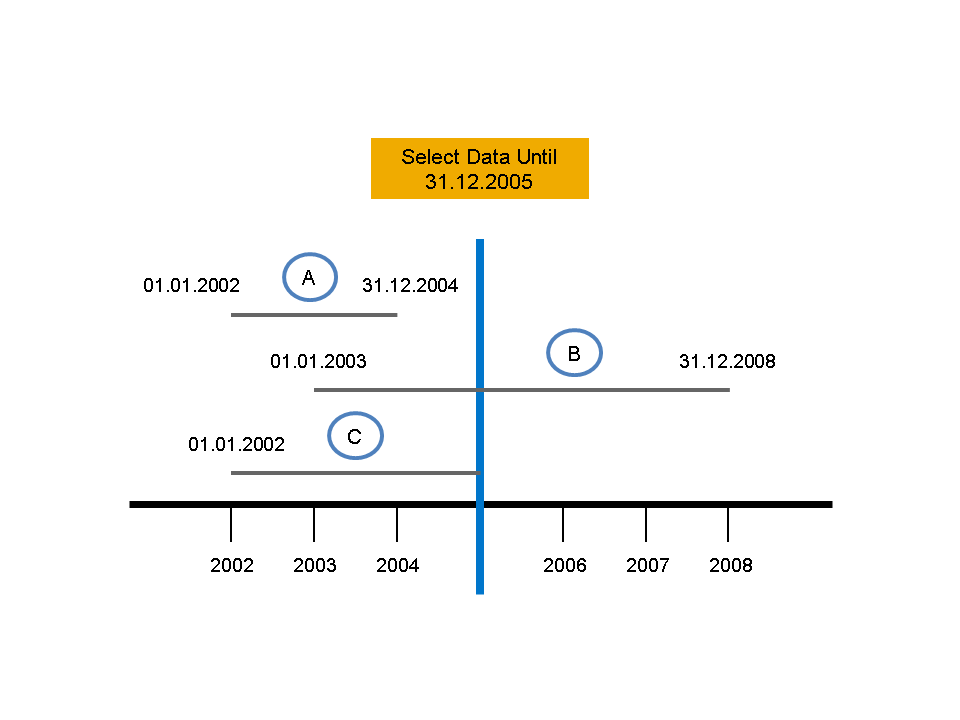
Block for Creating Data on Maternity Protection or Parental Leave
There are three data records for three employees for maternity protection and parental leave. The end date of two data records (A and C) is before the destruction date December 31, 2005, which means that these data records are completed. The end date of data record B is after the destruction date, which means that this record is not completed. Data destruction is performed for data records A and C. For data record B, no data is destroyed since the check showed that the data record does not meet the retention rule since it is not older than five years. After the data destruction session has been completed, the following actions are no longer possible due to the block on creating data:
For the period before December 31, 2005, you cannot create any data on maternity protection or parental leave for these employees.
The data record that was not destroyed may not be changed.
If the infotype data records are not from Time Management, they can be delimited on January 1, 2006.
Creating data is blocked, irrespective of which transaction you use to create data.