 Transfer of Transportation Unit Items
The following describes how transportation unit items can be transferred to other business documents. For the sake of simplicity, this function is explained for railcar units only and it is assumed that there is only one railcar unit and one product. However, this function also supports trailer units and container units as well as more complex scenarios with several railcar items, railcar units, and products.
Features
Forwarding order already contains railcar item
In this case, you already create a railcar item when you create the forwarding order. If you have made the necessary settings in Customizing, the system automatically creates a railcar unit instead of a freight unit when it builds the freight unit (see Creation and Editing of Freight Units). This contains the railcar item from the forwarding order. You then create a rail freight order with a locomotive item and assign the railcar unit. The system automatically transfers the railcar item to the rail freight order.
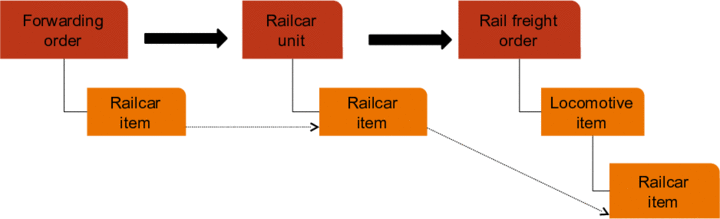
Forwarding order contains product only; one rail carrier is responsible for the entire transportation chain
In this case, you create a forwarding order and enter a pallet and a product. The system automatically creates a freight unit during freight unit building that contains the product. You then create a rail freight order with a locomotive item and a railcar item. If you assign the freight unit to the railcar unit, the system automatically transfers the pallet and the product as well.
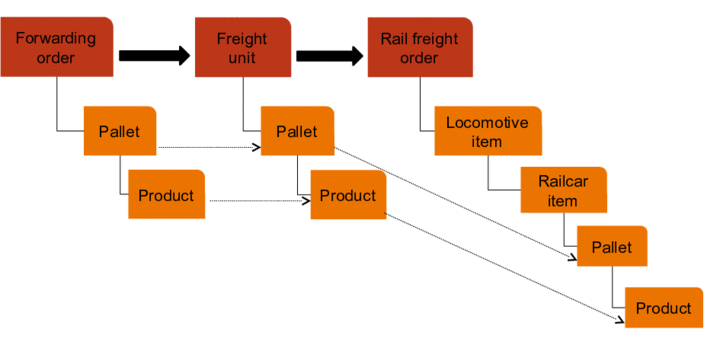
Forwarding order contains product only; several rail carriers are responsible for the transportation chain
In this case, you create a forwarding order and enter a product. The system automatically creates one or more freight units during freight unit building. These units contain the product. You then create a railcar unit with a railcar item and assign the freight units and the product. Next, you create a rail freight order with a locomotive item for each transportation stage of the railcar unit. You can do this directly from the railcar unit, for example. The system automatically transfers the railcar item and the product item to the rail freight order. In this scenario, the railcar remains stable across several transportation stages (that is, in several rail freight orders). For the sake of simplicity, the figure below shows only one rail freight order.
