 Direct Store Delivery (DSD) in Retail
Direct Store Delivery (DSD) is a business process that enables retailers to procure articles (goods) directly from a vendor (distributor). The vendor delivers the articles directly to the retail store - in contrast to delivery via in-house distribution centers/warehouses.
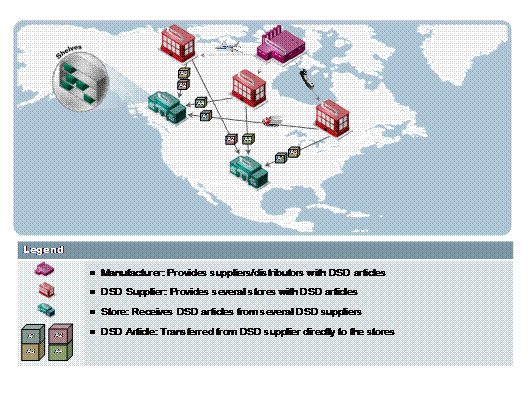
Usually, the DSD process includes articles from specific material groups only, for example alcoholic beverages, carbonated beverages, pastries, salted pastries, and perishables. These are usually articles with high levels of turnover and limited shelf life.
The business process begins with the negotiations between the retailer and the manufacturer (a brewery, for example). During these initial negotiations, the general product range is agreed. This may include, for example, which new products the retailer will include in his assortment, and which promotional campaigns the manufacturer is planning.
The manufacturer plays more of a strategic role (definition of brands, material groups, products). The retailer conducts the operative business (detailed price agreements) together with the vendors. The manufacturer has a controlling function, in order to safeguard the service quality of the vendors concerned. The vendor has the responsibility to ensure that the manufacturer's products are available on the store shelves in time. In addition, the manufacturer may take on the role of vendor.
For this reason, the actual business relationships are conducted between the retailer and the vendor. The retailer makes all agreements regarding marketed articles, purchase quantities, and purchase conditions with the vendor. The result of these negotiations is a contract with the vendor, in which the contractual parties specify which articles can be supplied to which stores.The contract also includes the price agreements and any reimbursements and promotions.
The vendor is responsible for ensuring the replenishment of the relevant stores' shelves. The vendor is also responsible for ensuring that the articles supplied are placed in a sales-enhancing position within the store (vendor-managed inventory). However, replenishment orders may also be the responsibility of the store, with the vendor responsible only for direct delivery. The settlement of the articles supplied is also carried out directly to the vendor.
The Category Manager of the retailer and the concerned vendors conduct intensive price negotiations. Particularly on the North American market, there are numerous legal requirements (on national level, state level, or even on urban district level) that regulate levels of taxation. In extreme cases, the increased costs arising from these tax regulations and the long and differing delivery paths may result in different purchase prices for articles and stores. In this case, the Category Manager aims to achieve acceptable sales prices by means of profitable margins. In addition, reimbursements granted to individual stores by the vendor also play a role. The result of this is that the sales price must be specified individually for each store, similar to the purchase price. Depending on the number of stores involved, and if there is no competition, you can also manage the sales prices on the level of the distribution chain or via the price lists.
Changes to a vendor's local supply responsibilities force the retailer to adjust the supply relationships of the stores to the vendor concerned.
These changes usually apply to numerous articles and several stores (mass change). When you adjust supply relationships, it may be useful to transfer existing purchase prices from the old vendor to the new vendor, and then to make adjustments (in individual cases) on the basis of price agreements.
For individual articles and given stores, there is always a unique delivery strategy: either DSD delivery or delivery via a distribution center. For DSD, the Category Manager specifies unique supply relationships. These regulate which article in the given store is supplied by which vendor. According to these supply relationships (vendor - store - article), vendors are authorized to deliver their articles to the specified stores only. The retailer usually checks this on delivery. This enables the retailer to refuse receipt of non-authorized articles.