 Evaluating Residence Rules
In the case of residence rules, all ILM policies of an ILM object refer to exactly one audit area. When evaluating ILM rules, the system determines the start and end dates of the residence period. The rule simulation log differentiates between the following rule types:
Valid rules (rules that correspond to the conditions)
Operative rule that affects the determination of the residence period
Determining the Operative Residence Period
To determine the operative rule and, thereby, the operative period (start and end dates), the system does the following:
Evaluation of the valid rule with the highest priority from each live policy in the audit area and calculation of the following value for each rule:
Start date (based on the method for start date in determination defined in Customizing)
For more information, see: Explicit and implicit start date determination
End date (start date plus duration)
Determines the operative rule according to the following principle:
The only valid rule is the one supplied by the latest end date.
Example
The following figure describes how to determine the start and end dates for the residence period of an ILM object instance.
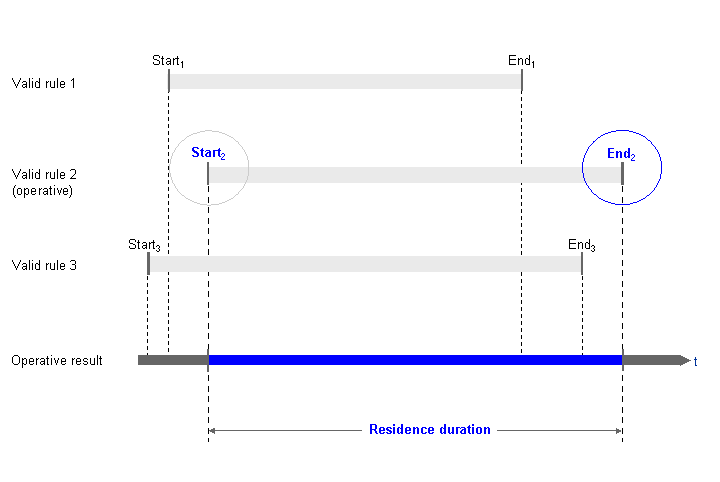
Determining the operative residence period based on multiple ILM rules
Valid Rule |
Result of the Rule |
Operative Result |
Effect on the Data |
|---|---|---|---|
Rule 1 |
End date is before the operative end date |
No operative result |
No effect |
Rule 2 |
Latest end date of the residence period |
|
The data must retain a specific status within this period (for example, in the system database). Thereafter, data archiving or date destruction can begin. |
Rule 3 |
End date is before the operative end date |
No operative result |
No effect |