
 Connectivity

The following graphic provides an overview of all the components that can communicate with the Integration Server:
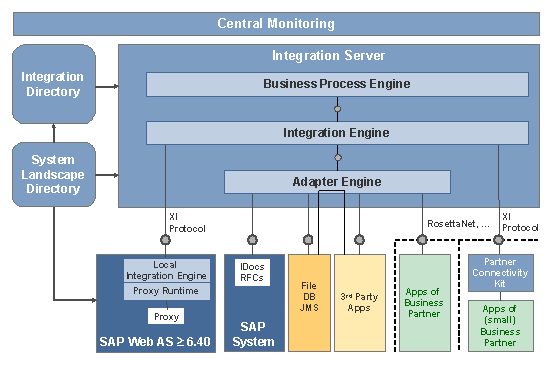
All the systems either send messages to, or receive messages from the Integration Server. It is the task of the Integration Server to distribute the messages received according to the rules that are configured in the Integration Directory. In this way, messages can be exchanged between all systems in a heterogeneous system landscape, regardless of whether a message was sent to the Integration Server using an adapter or the proxy runtime.

Communication using the Integration Server is oriented towards asynchronous communication. Synchronous communication is supported, should it be required.
As soon as all communication parties in a scenario can exchange messages with the Integration Server, the communication parties can all communicate with each other using the Integration Server as the mediator. The following sections describe the various communication parties of the Integration Server:
● Communication Using the Web Services Runtime,
● Communication Using the Proxy Runtime,
● Communication Using the Adapter Runtime,
● Communication with Embedded Process Integration
● Communication Using Industry Standards (RosettaNet)
● Communication Between PI Landscapes.
● The Advanced Adapter Engine can also process message locally and it is possible to configure communication without including the Integration Engine.
More information: Local Message Processing with the Advanced Adapter Engine
The various options available for connecting systems to the Integration Server are summarized under the term Connectivity.