
 Default Groups

Definition
The following default groups are determined dynamically at runtime. They are not defined in the user data source.
● Everyone
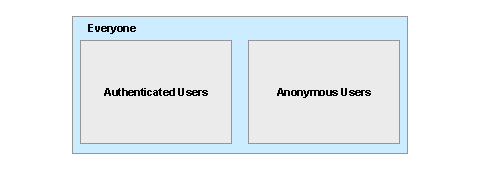
This group is the sum of the groups Anonymous Users and Authenticated Users.
● Anonymous Users
This group contains all named anonymous users that are listed in the user management engine (UME) property ume.login.guest_user.uniqueids.
● Authenticated Users
This group contains all non-anonymous users, that is, users who must authenticate themselves to access an application.
The following figure illustrates the relationship between the groups.
In addition, the
SAP NetWeaver Application Server (AS) Java creates standard groups for
administrators and guests (default names dependent on installation parameters:
Administrators and Guests or SAP_J2EE_ADMIN and SAP_J2EE_GST). See
 Standard User
Groups.
Standard User
Groups.
You can change the display names and descriptions of the default groups in UME properties. For more information, see Configuring Groups' Name, Display Name, and Description. Changing the display name of these groups has no effects on permissions already assigned to these groups. You do not have to reassign the permissions to the new names.

The UME maintains internally, the default groups Everyone, Authenticated Users, and Anonymous Users. If you have groups with these names in your LDAP directory, the UME blocks reading them from the LDAP directory by default. The UME uses the configuration setting Unique Name of Blocked Groups to define which groups are blocked.