 Single-Level Material Price Determination
Use
Single-level material price determination calculates the periodic unit price for a material. The standard price and the cumulative single-level differences of the period are taken into account. The material price calculated in multilevel price determination can be used for inventory valuation. Single-level price determination is a prerequisite for multilevel price determination .
For more information on the process flow, see: Periodic Actual Costing .
Prerequisites
The material ledger is active.
The price determination indicator in the material master is set to 3 .
The price control indicator in the material master is set to S .
Features of Single-Level Material Price Determination
A level is identified by a material and its associated procurement process . For a material whose price is calculated through single-level price determination, movements are always valuated at standard price because the price control indicator in the material master record is set to S. Differences between the standard price and the actual price of a valuated transaction are updated in the material ledger.
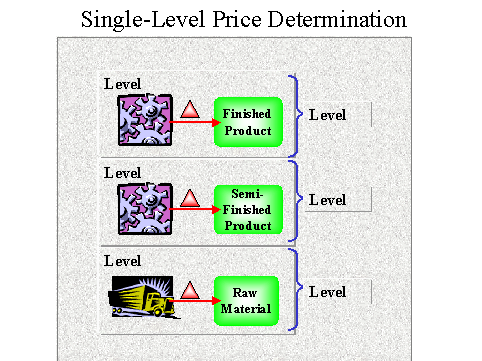 ( )
( )
Single-level material price determination takes into account the differences that arise directly when a material is procured:
Price differences
These occur when the amount posted for a movement differs from the standard price in the material master record. The following transactions can cause these differences:
Goods receipts resulting from a purchase order
Invoice receipts
Settlement of production orders, process orders, and run schedule headers
Transfer postings
Initial entry of stock balances with values
Free delivery
Inward movements from consignment stock to the company’s own stock
Exchange rate differences
These occur when an amount in a foreign currency is translated using different exchange rates. This is the case, for example, when the exchange rate that applies when the invoice is entered differs from the exchange rate that applies when the goods receipt is entered.
Differences from revaluations
These occur from a credit/debit to a material, a price change, or a posting to a prior period, for example.
The price calculated in price determination is updated as a moving average price in the Accounting 1 view of the material master record The price control indicator remains set to S . The standard price does not change.
Constraints
Materials whose prices are determined with transaction-based price determination cannot be considered later in multilevel actual costing.
Note
 Note
Note
You must perform single-level material price determination for all materials for each posting period, regardless of whether any material movements have occurred for the relevant materials.
See also: