 Architecture of the SAP Cache Server
Despite their similar architecture, the SAP Cache Server and the SAP Content Server have some basic differences. The cache server can set up its own HTTP connections to other servers and can forward incoming client requests. The "other servers" can be content servers or other cache servers. If the server in question is another cache server, this architecture is known as cascaded or multi-layer caching (see also Multi-Layer Caching and Content Server Aliases).
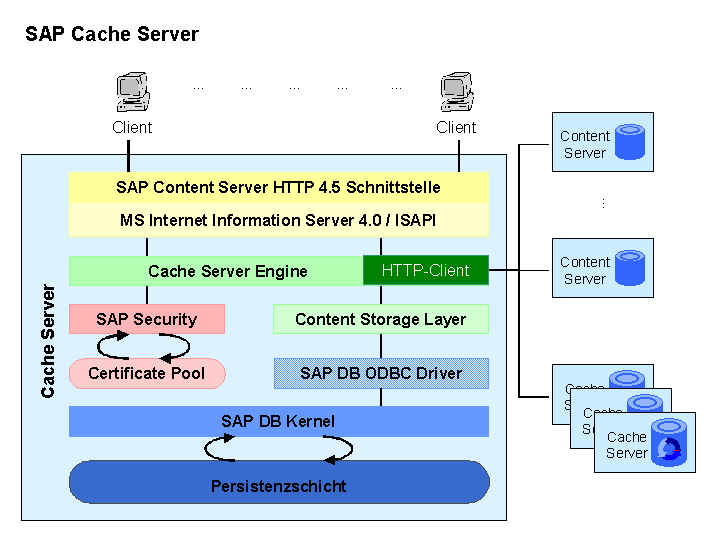
A notable feature of the cache is its almost complete freedom in terms of administration. As soon as the cache is integrated into the server topology, it can start performing its services without the need for log monitoring or backups.
Caches are always used for read access to documents. "Lazy write" is not supported. In other words, a client that wants to store documents must always be directly connected to the corresponding cache server.
As already described (see Content Management Service), SAP HTTP Content Server interface supports signed URLs. Cache URLs can of course also be signed. However, it would be very inconvenient if the cache had to rely on the Content Server to carry out signature checks every time. It therefore makes sense for the cache to check the signatures itself. To this end, the cache contains all the necessary SAP certificates, or else it gets them from the appropriate content server.
 Note
Note
The Cache Server has the same security mechanisms as the Content Server.