
 ABAP Classes /SAPAPO/CL_RRP_CTP &
/SAPAPO/CL_RRP_FIX: Comparison
ABAP Classes /SAPAPO/CL_RRP_CTP &
/SAPAPO/CL_RRP_FIX: Comparison

For the CTP process, the standard class /SAPAPO/CL_RRP_CTP is offered. This class controls system behavior in the CTP check in connection with fixed pegging. As an alternative to this ABAP class, you can use the standard class of the ATP process /SAPAPO/CL_RRP_FIX if you wish to have a different system behavior in the CTP process.
The key difference between the two classes is that in the case of the class /SAPAPO/CL_RRP_CTP the system deletes the existing fixed pegging relationships and reassigns the customer requirements to the receipt elements with each new invocation of the CTP check for an already confirmed sales order (if you change the desired date/time in the sales order for example). The system then creates new fixed pegging relationships to fix the assignment.
In the case of the class /SAPAPO/CL_RRP_FIX, on the other hand, the fixed pegging relationships are retained. A renewed check is always carried out against the fixed pegging. The system merely adjusts the pegging quantities if necessary but leaves the fixed pegging relationships unchanged.
The system behavior in connection with each class is made clear by the following example:
Example 1a: Bring forward sales order (class /SAPAPO/CL_RRP_CTP)
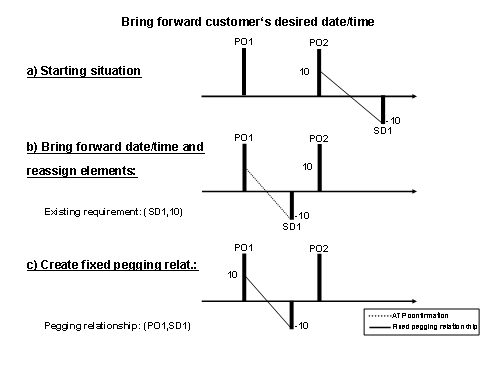
In this example, an already confirmed sales order (SD1) is changed again. You change the requirement date/time on which the desired quantity amounting to 10 pc is needed. The system deletes the existing fixed pegging relationship between the customer requirement SD1 and the planned order PO2 and carries out a new CTP check. In the CTP check, the system assigns the planned order PO1 to the customer requirement because it is more favorable in terms of time.
Example 1b: Bring forward sales order (class /SAPAPO/CL_RRP_FIX)
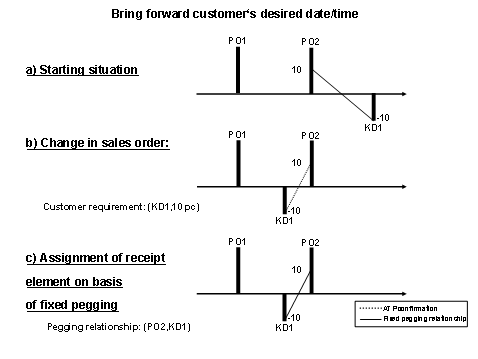
If this class is used, the system does not delete the fixed pegging relationship in the event of a renewed check, but assigns the existing planned order PO2 to the changed customer requirement again because the check is carried out against the fixed pegging.
Example 2a: Defer sales order (class /SAPAPO/CL_RRP_CTP)
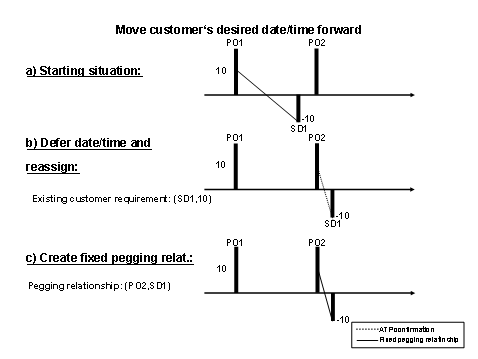
If the CTP class is used, the system deletes the fixed pegging relationship and reassigns the changed customer requirement to a more suitable planned order, in terms of time, in the CTP check. The system then creates a new pegging relationship between the customer requirement SD1 and the planned order PO2.
Example 2b: Defer sales order (class /SAPAPO/CL_RRP_FIX)

If this class is used, the system retains the existing fixed pegging relationships. In the case of a renewed check due to the changed sales order date/time, the customer requirement is reassigned to the same receipt element because the system takes account of the existing fixed pegging relationship in the check.