Application Object
Definition
An object in the application system that maps a complex process or part of a process that is relevant to supply chain event management (SCEM-relevant). You or a system can report events to an application object.
Examples of application objects (AOs):
A procurement process
A container shipment
A leased pallet
Use
You use application objects to specify the objects and processes for which you want to determine supply chain event management relevance (SCEM relevance) ( Application Object Type Determination ).
The application system sends the SCEM-relevant data from these objects and processes to SAP Event Management (SAP EM).
By determining the application objects, you specify the level of detail of the SCEM-relevant objects and processes. An application object can map not only an entire business object in the application system, but also parts of objects. You can also map cross-business-object processes in conjunction with event types.
 Example
You map an entire procurement process. On the other hand, you can also specify that the individual pallets belonging to the supplier are SCEM-relevant objects.
In procurement, you define the purchase order item as the application object type. You define the delivery, invoice, and Financial Accounting as event types. You have an SCEM-relevant application object, Purchase Order Item . In this case, the corresponding event handler represents the entire follow-on process and not just the purchase order item. This means that you can also send events from other business objects to this event handler.
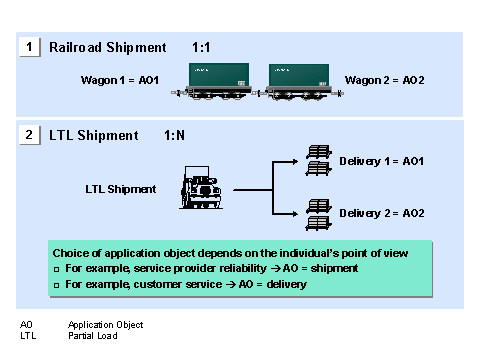
The following relationships can exist between an object from the application system (business object) and the application object:
A one-to-one relationship (for example, you track an entire truck)
A one-to-N relationship (for example, you track the individual packages in a truck as part of an SCEM-relevant process)
The following figure provides an overview of the relationships between business objects and application objects:
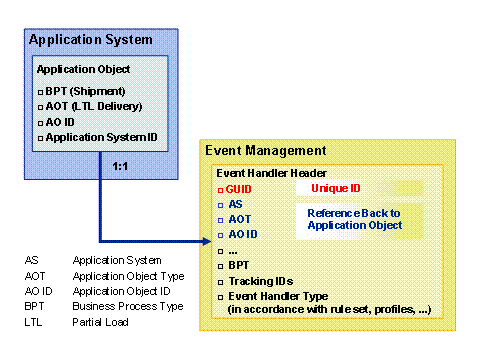
As a result of determining, changing, or saving an SCEM-relevant application object in the application system, SAP EM creates an event handler that represents this application object (one-to-one relationship).
When you delete an application object in the application system, SAP EM marks the corresponding event handler(s) as deleted, but does not physically delete them from the database.
To track an entire business process and its sub-processes, you can create an event handler for each sub-process. You join these event handlers together in an event handler set . You can track a fulfillment process with its sales order, delivery, and shipment, for example.
The following figure provides an overview of the relationship between the application object and the event handler: