
 Organization of Shipment Content

From the point of
view of software logistics, a product is a shipment unit that can exist in
different versions. A product comprises one or more software
components that in turn can also have different software component
versions. The System Landscape Directory stores the information about which
version of a product requires which software component versions (see also:
 Products and
Software Components). Software component versions and product versions are
found in the Integration Builder:
Products and
Software Components). Software component versions and product versions are
found in the Integration Builder:
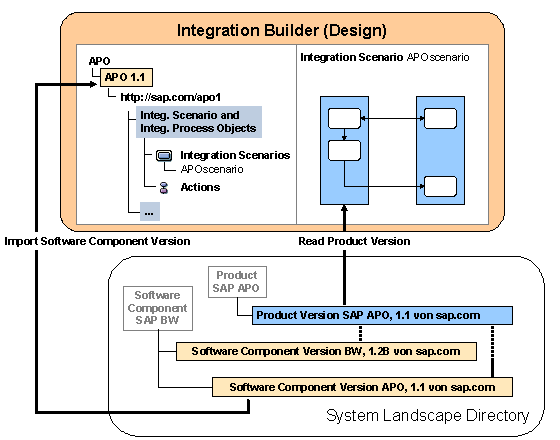
In this example, the product version SAP APO 1.1 comprises the software component versions BW 1.2B and APO 1.1. The corresponding information about the product version is located in the System Landscape Directory. Since not all software component versions from the System Landscape Directory are relevant for the Integration Repository, you must selectively import those software component versions that are to be made available using XI content. Once you have imported these software component versions they are displayed in the navigation tree. The graphic shows the expanded hierarchy for software component version APO 1.1. The development of design objects in the Integration Builder is therefore primarily associated with the software component versions.
After you have imported a software component version, create one or more namespaces for it to separate the design objects within the software component versions into more manageable development units. Note that the object references within the Integration Repository are restricted to ensure that objects that belong together are consistently shipped together.
The product version is not visible in the navigation tree, unlike the software component version. This is because the software component versions that make up a product version have already been defined in the System Landscape Directory. However, you can create a reference to product versions when describing an integration scenario. When creating an application component (as a communication party) you can assign a product version to it.