 Extrapolation of Demand from Billing
Use
In meter reading, the highest demand value in a representative interval is used as the expected value for determining the expected meter reading values from the previous period for demand registers.
However, this demand value is not always sufficient for billing purposes. Therefore, for the extrapolation of demand values from billing, the system calls a table of values, which are transferred to the extrapolation period. The source of these values can be any of the following:
Actual meter reading results from the extrapolation period
Period consumption values from the extrapolation period
Values from a comparable period from the base period
Prerequisites
The base period does not have to be representative (as it does for extrapolation for meter reading).
Features
The extrapolation of demand values from billing consists of the following steps:
Determination of the extrapolation period
 ( )
( )
Determination of actual meter reading results with a meter reading period that overlaps with the extrapolation period
Transfer of meter reading results to the extrapolation period
 ( )
( )
Determination of the time variability
Transfer of schedule records to the extrapolation period
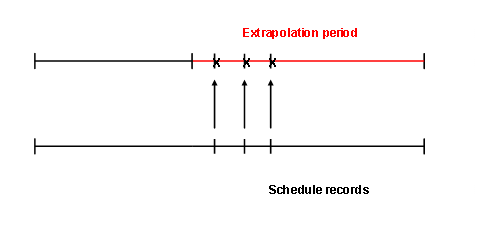 ( )
( )
Determination of period consumption
Transfer of period consumption to the extrapolation period
 ( )
( )
Determination of gaps in the extrapolation period, that are neither covered by actual meter reading results nor by period consumption values
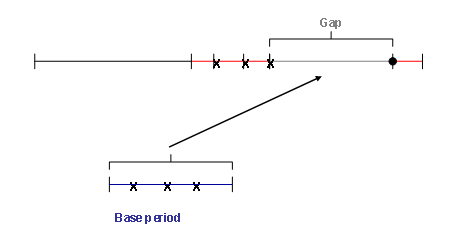 ( )
( )
Transfer of meter reading results from the base period to the gaps in the extrapolation period
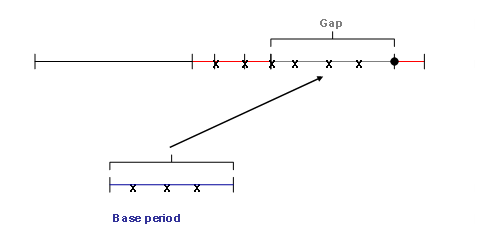 ( )
( )
Example
Six-monthly meter reading and billing of the average from the peak values of each half year
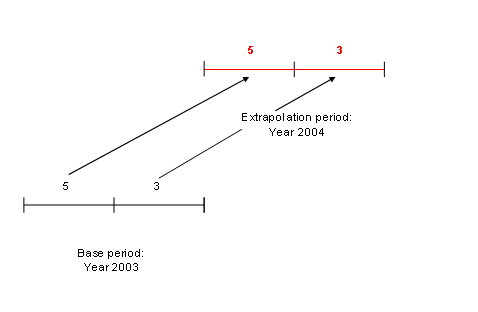
For the budget billing calculation of the year 2000, both demand values from 1999 are used with their allocations to the 2 half years. This is the only way to ensure that the same average value is calculated for 2000 as for 1999 (5+3/2).
Quarterly billing with three multiple meter reading orders; Each demand value is cleared separately for the relevant month
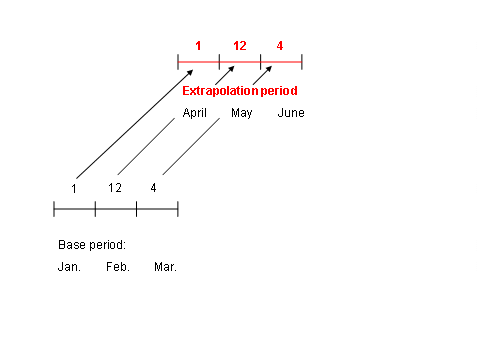
If the base period is the same as the previous period, the relevant demand values from the three previous months are used and transferred to the extrapolation period.