 Business Transaction Categories
Business transaction categories are defined by SAP and correspond to business object types in the business object repository, for example, Sales
(BUS200115
), Service Process
(BUS200116
), Business
Activity
(BUS200126
).
A business transaction category determines the business context in which a business transaction or item can be used. It determines the following:
The maximum allowed structure of a certain type of transaction (the actual structure is defined by the transaction type)
The subobjects of which the transaction category consists
For more information about subobjects, see Business Transaction Subobjects.
Secondary transaction categories with which the transaction category can be combined (the actual combination is defined in the transaction type)
The item object types of which the transaction category consists, and hence the subobjects of which the item object type consists
A transaction type is assigned to one or more business transaction categories. Only specific combinations of business transaction categories are allowed. In addition to the general settings for a transaction type, you need to make Customizing settings specifically for each business transaction category assigned to a transaction type.
In the definition of the transaction type, you define one business transaction category as the leading business transaction category. This indicates that the transaction category has the greatest relevance for the transaction type (and not that the category is related hierarchically to the categories).
 Example
A sales order with business activity data, for example, has Sales
as a leading transaction category, but also has the transaction category Business Activity
assigned. The transaction is considered a sales transaction rather than
as an activity for the purpose of processing on the user interface.
The leading transaction category of a transaction type determines which Customizing options are available for this transaction type, such as which item categories can belong to the transaction type or which secondary transaction categories can be assigned. The assigned transaction categories define which additional functionality is available for this transaction type (for example, whether it can be used in sales processes).
The assigned transaction category can be the same category as the leading transaction category, if additional Customizing is required for the leading transaction category.
Technical Model
The figure below shows the technical modelling of transaction categories and is followed by an explanation:
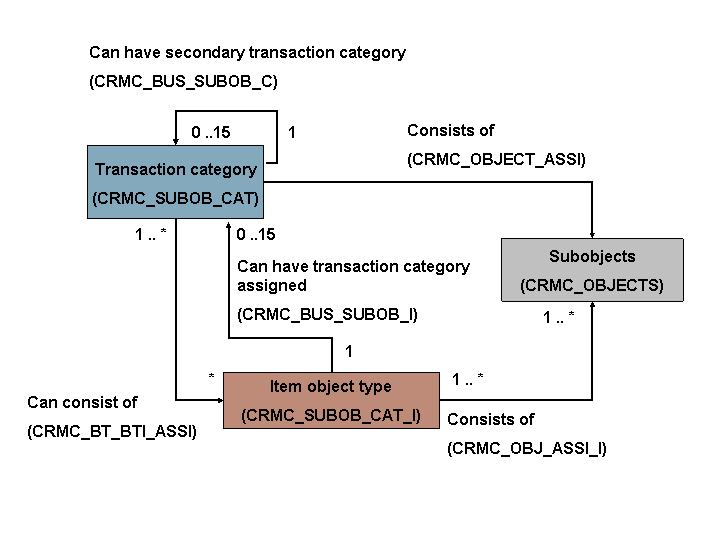
The following table explains the above figure by showing the individual definitions and assignments that make up the definition of a transaction category:
Definition/Assignment |
System Table in Which Definition/Assignment is Stored |
|---|---|
Transaction category |
|
Allowed item object types for a transaction category |
|
Subobject |
|
Assignment of subobjects to a transaction category |
|
Allowed combination of transaction categories |
|
Item object type |
|
Subobjects of which item object types consist |
|
Allowed transaction categories for item object type |
|
Example
The figure below shows the object modelling of the Sales
transaction category and is followed by an explanation:

The Sales
transaction category consists of several subobjects, including header, item, and status. It consists of several item object types, such as the sales item. These item object types can, in turn, have several transaction categories assigned to them.
The Sales
transaction category can be combined with the Activity
transaction category, which also consists of several subobjects.