
 Repository Framework
The repository framework (RF) is an extendable framework. It enables applications to access and manipulate objects that are stored in various information sources in a uniform, consistent manner. The figure shows how applications access objects provided by information sources, using the repository framework and a repository manager.
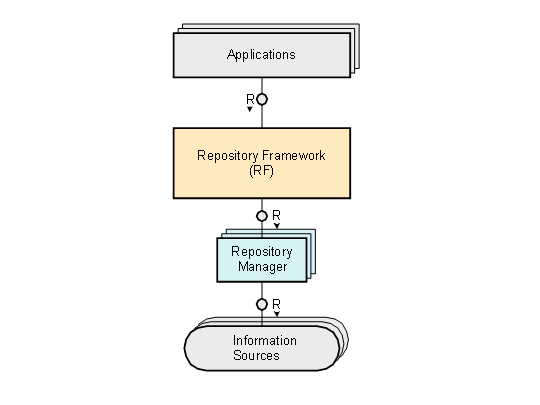
An information source or repository can, for example, be a document management system or a file system that stores unstructured data like text or graphics. It can also be a backend system like a database or an ERP system that contains structured data in the form of data records or business objects.
A repository is connected to the repository framework with a repository manager. The repository manager converts the repository's internal representation of information into the uniform representation of the framework and vice versa. Applications benefit from the uniform representation because they do not have to deal with the specific behavior of different information sources. For example, a workflow application based on the framework can be extended to documents in other repositories simply by integrating the repositories in the framework. No special coding is required. Similarly, objects from information sources can benefit from the applications built on top of the framework. When a new repository is integrated in the framework, all the objects that are exposed as resources can use the applications and functions available for the framework. For example, the resources of a newly integrated repository can be searched with search functions of Knowledge Management without explicitly implementing them.