
 Managing Schedule Data
Use
You use this business process to determine when meters are periodically read. You can define whether a meter reader reads the meter, whether the customer reads the meter, or whether the periodic meter reading is estimated. You can also define when the meter is billed as well as other billing-relevant information.
Meters are allocated for scheduling through the installations, in which the relevant meters are installed A meter reading unit is entered in the installation. Meter reading units group together utility installations by regional viewpoints. They contain all the data relevant to the scheduling of the meter reading. Portions group contracts that are to be billed together. You allocate a contract to a portion either directly in the contract, or indirectly via the meter reading units that are specified in the installation associated with that contract.
If the customer has a budget billing plan, you can use scheduling to define the data for creating the partial bill or for the print out of the budget billing request.
Process Flow
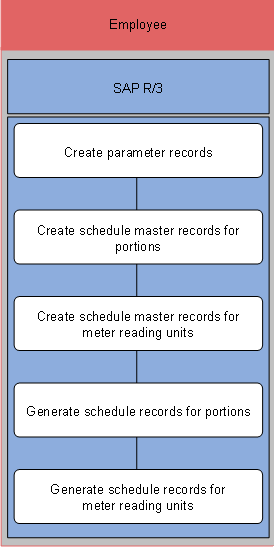
The following process runs in SAP R/3 (SAP Utilities):
...
1. Create parameter records
In this step, you can define the budget billing cycles in the parameter records.
It is always necessary to create a parameter record, even if you do not want to increase a budget billing amount. You must therefore create at least one parameter record.
2. Create schedule master records for portions
In this step, you define the portions that group together a utility company’s contracts for billing from a regional point of view.
You allocate contracts to a portion indirectly by allocating that portion to a meter reading unit. The meter reading unit is defined in the installation. A single contract is allocated to an installation.
You use the period length of the portion, which you specify in months or days, to define how often the contract is billed as well as the budget billing period. The system generates the due dates for the budget billing amounts using the data in the parameter record and the date of the end of the billing period.
3. Create schedule master records for meter reading units
In this step, you define the meter reading units that group together a utility company’s installations for meter reading from a regional point of view.
To allocate an installation to a particular meter reading unit, you enter that meter reading unit in the installation.
4. Generate schedule records for portions
In this step, you can generate schedule records based on the schedule master record. These schedule records are the basis for billing the contract that are allocated to this portion through a meter reading unit.
5. Generate schedule records for meter reading units
In this step, you can generate schedule records based on the schedule master record of the meter reading unit. These schedule records are the basis for creating periodic meter reading orders.
Result
You have created scheduling, which is a prerequisite for creating meter reading orders, executing billing, and generating budget billing plans.
In the next step, you can enter meter reading results.