 Authentication Using X.509 Client Certificates

Authentication Using X.509 Client Certificates
Purpose
With this PAS option, the user is authenticated using the SSL protocol and X.509 client certificates, which takes place between the user’s Web browser and the Web server. If successful, the user’s Distinguished Name that is contained in his or her certificate is passed to the SAP system. The user’s SAP system ID is obtained from the mapping table USREXTID in the SAP system and a logon ticket is created for the user. Single Sign-On is then available to additional SAP services using the logon ticket.
Prerequisites
For the prerequisites for using X.509 client certificates for PAS, see the following topics:
Process Flow
See the graphic below:
Using SSL and X.509 Client Certificates for Authentication
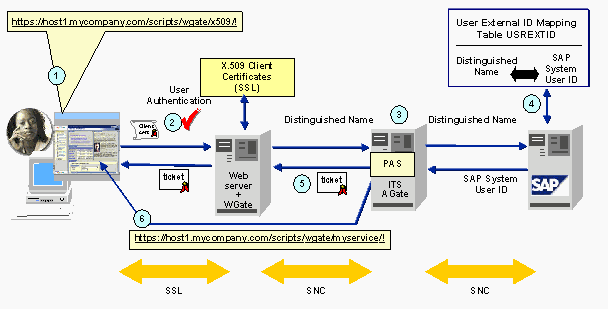
The process is as follows:
Result
No user ID and passwords entries are necessary for accessing the SAP system.
When the user accesses further SAP services, the logon ticket is used for Single Sign-On access.