Partner Interface Process
RosettaNet standardization aligns business processes between trading partners in a supply chain. RosettaNet provides these standards as Partner Interface Process (PIP) specifications.
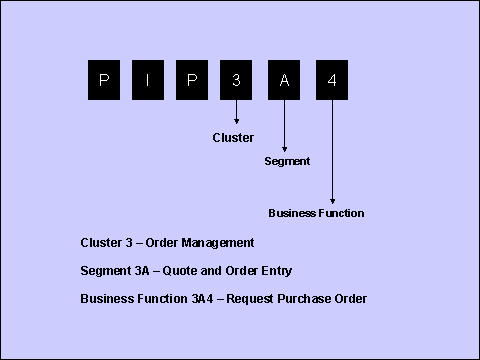
The entire e-business supply chain domain for which PIPs are specified are divided into clusters. Each cluster is further sub-divided into segments. Each segment consists of several PIPs.
An overall business process is composed of a number of PIPs.
PIPs include specification of partner business roles such as buyer, seller and so on, activities conducted between the roles and type, content, and sequence of documents exchanged by the roles while performing these activities. Also specified are the time, security, and authentication of these interactions.
However, the structure and content of the documents exchanged is based on the business dictionary and technical dictionary. The PIP is a compilation of this message type information into document type definitions (DTDs) and message guidelines.
Trading partners exchange documents that match the DTDs by using network protocols specified by RNIF.
The following graphic is an example of a PIP layout.