
 REEDMSETTLPROC_EXTANALYT

Enhanced Analytical Procedure (Optimized)
Settlement procedure EXTANALYT uses an optimized algorithm for the distribution of the remaining curve based on forecasted usage factors. It is no longer necessary to generate the consumption history (previous year's consumption).
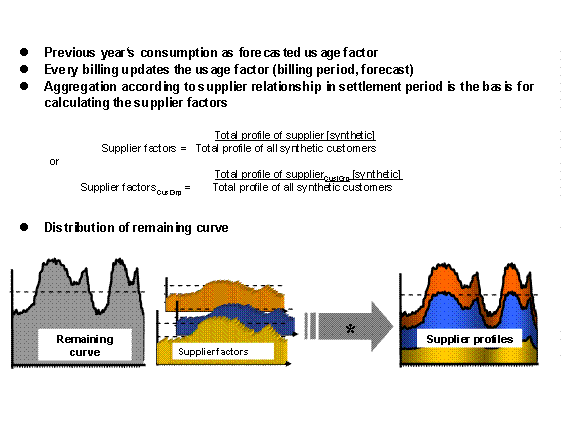

It is assumed that synthetic profiles (with a role that is relevant to settlement) are allocated to all residential customers and that the usage factor is updated during billing.
The following steps are executed in report REEDMSETTLPROC_EXTANALYT:
1. Set status of settlement run to Started
2. Generate settlement run instance
3. Check status of profile values for energy feeding line (settlement step STATCHECK1)
4. Select points of delivery relevant to settlement (settlement step ASSIGNPOD)
5. Calculate total load profile of interval customers for each settlement unit (settlement step SUMINTSU)
6. Calculate load profile of non-interval customers for each settlement unit (settlement step SUMRES01SU)
7. Calculate supplier factors for each customer group (settlement unit FASUPGRP01)
8. Determine remaining curve (load profile of all non-interval customers) (settlement step SUMRESALL)
9. Distribute remaining curve amongst customer groups for each settlement unit (settlement unit SUMRES05SU)
10. Calculate load profile of non-interval customers for each settlement unit (settlement step settlement step SUMRES02SU)
11. Determine total load profile for each settlement unit (settlement unit SUMSU)
12. Total load profile for settlement units including sub-settlement units (settlement step SUMSUALL)
13. Send settlement results (only if settlement run is active) (settlement step SENDSUPR)
14. Set status of settlement run to Completed (OK)
The profile and value parameters are returned to the ABAP memory by means of EXPORT so that the template can also be used for determining overtake and undertake amounts.
When you use the report for determining overtake and undertake amounts it is not possible to send settlement results or set the status to OK or Started, even during an active run.