 Retention Management
Retention Management is the second cornerstone of ILM from SAP, and it involves different tools and methods for managing all aspects of retaining data based on legal requirements. This includes retention policy management, ILM-aware storage integration, managing the destruction of data, as well as methods and tools for dealing with e-discovery and legal hold.
Process
The basic process involved in retention management consists of creating and maintaining policies for your data and then using data archiving to move the data from the system database to the storage system. The different archiving options cover the different needs of data volume management, data destruction, or system decommissioning. The following diagram shows the different aspects involved in retention management:
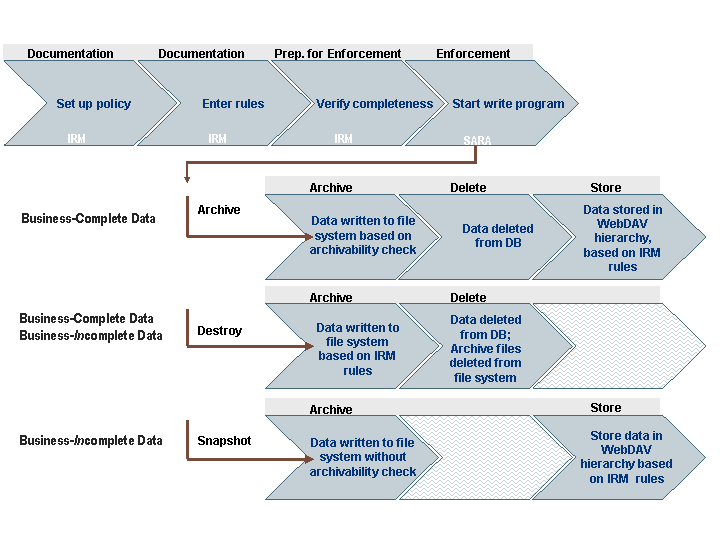
The Retention Management Process Steps
Part of retention management is also legal case management, which can be seen as the function used for exception handling. Data that is involved in a law suit often times needs to be “frozen” meaning that a legal hold is placed on it, and then has to be presented in court. Legal case management allows you to create legal cases, find the corresponding data and place legal holds on it. The legal holds override the retention rules from IRM, meaning that even if the expiration date for a data object has been reached and the data object can be destroyed, it would be protected by the legal hold until the law suit is over. The legal holds have to be propagated through a report that can be scheduled regularly. Legal case management involves the following steps:
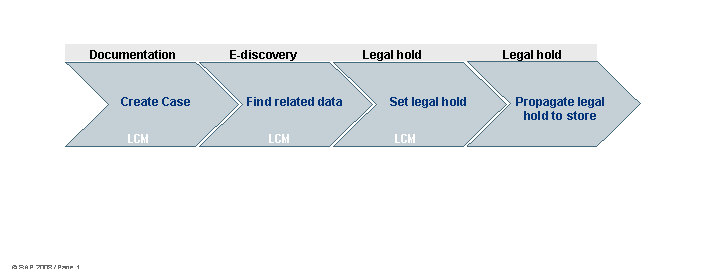
Legal Case and E-Discovery Support Process
More Information
For more information on these topics see: