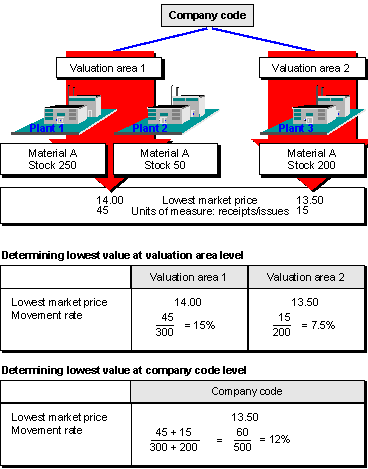

 Valuation Level: Example
Valuation Levels
If you set the dividing line between movement and non-movement at 10% and determine the lowest value on multiple levels, this leads to the results shown in the following table (with 20% devaluation and provided that the market price determined is lower than the current valuation price).
Results of Lowest Value Determination on Multiple Levels
|
Company code |
Valuation area 1 |
Valuation area 2 | |
Tax price 1 |
13.50 |
14.00 |
13.50 |
Tax price 2 |
13.50 |
14.00 |
10.80 |
Stock |
500 |
300 |
200 |
Balance sheet value |
6750 |
4200 |
2160 |
The total balance sheet value for the individual valuation areas is not necessarily smaller than the balance sheet value at company code level. For example, if the dividing line between fast-moving and slow-moving is 13%, material A would be classified as slow/non-moving at the company code level. The tax price 2 is then reduced and the balance sheet value would also decrease.