
 Example
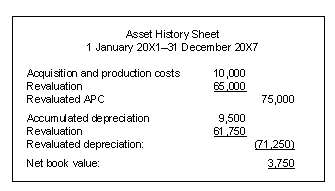
You own a machine with an expected useful life of seven years. At the end of the machine’s useful life, its acquisition and production costs are UNI 75,000, once it has been revaluated. Depreciation, once revaluated, is UNI 71,250. The asset's revaluated scrap value is therefore UNI 3,750 (see below).
The asset's useful life ends on 31 December 20X7. On 31 January 20X8, you run the Asset Revaluation (Inflation) program as you do every month. Here's what happens to the asset in both cases.
Revaluation Stops After End of Useful Life
If you you stop revaluating your assets once they reach the end of their useful lives, the program ignores the asset entirely. The asset's scrap value remains at UNI 3,750 for ever.
Revaluation Continues After End of Useful Life
Now assume that you continue revaluating the asset after the end of its useful life, and that in January 20X8, inflation rose by 4%.
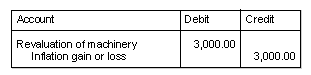
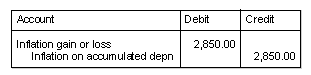
The system makes the following accounting postings, one to adjust the machinery's APC, and one to adjust the accumulated depreciation:
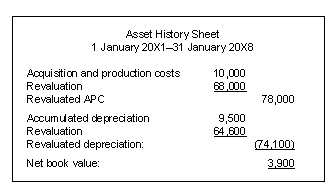
Since the asset has already reached the end of its useful life, it is no longer depreciated. Therefore, only the acquisition and production costs and the accumulated depreciation are revaluated. The asset's history sheet now looks as follows: