

 Limit Type
Definition
The limit type comprises limits and limit utilizations. When you define a limit type, you can assign individual limit characteristics or combinations of the various limit characteristics that are available in the system settings.

When you create a limit type filter, you use limit characteristics to restrict the respective limit type by freely definable ranges. Use of the limit type filter is optional. You use it to create additional criteria for decision making besides the limit characteristics of a limit type, such as whether or not transactions are to be attributed to a limit type. You create limit type filters in the same place in Customizing where you create limit types.
Use
Using the characteristic value combination of the limit type, the system selects the risks of the respective transactions and compares the total of these with the limits. You create limit types in Customizing by choosing ® Limit Management ® Define Limit Types.
 Example
In Customizing, the following limit types were created initially:
|
One-dimensional limit types |
Multi-dimensional limit types |
|
Country |
Country/industry |
|
Industry (sector) |
Partner/limit product group/trader |
|
Partner |
Limit product group/trader |
|
Limit product group (LGP) |
|
|
Trader |
In the example, the limit type partner/limit product group/trader consists of the combination of the limit characteristics business partner number, limit product group and trader.
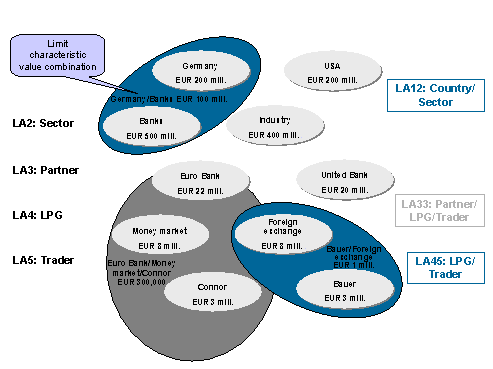
The limit of EUR300,000 can, for example, be assigned to the values of the limit characteristics Euro Bank, money market and trader Connor. This means that trader Connor is allowed to conclude money market transactions with the Euro Bank up to a limit utilization of EUR300,000.