Line Balancing
Definition
A line balance is the adjustment of the capacity of a line hierarchy to a specific model mix. The capacity of the line hierarchy is determined by the number of takts and the number of individual capacities in the line segments. The model mix is determined by several materials, the rate of the materials and the rate routings, according to which the materials are produced.
You can adjust the capacity by changing the number of takts (processing stations) and the individual capacities (people) and if applicable the assignment of the operations to the line segments. Here, the system automatically adjusts the rate routings in the background.
As the model mix generally changes with time, create the line balance as versions with a defined validity period.
Use
You carry out a line balance if you use Sequencing and if you produce several materials or material variants on a production line at one time.
With model mix production, operations and standard values for the individual materials in the line segments can vary. However, Sequencing does not take into account the execution times of takt-based scheduling, but multiplies the takt times with the number of takts. Therefore you must make sure, using the line balance, that the average
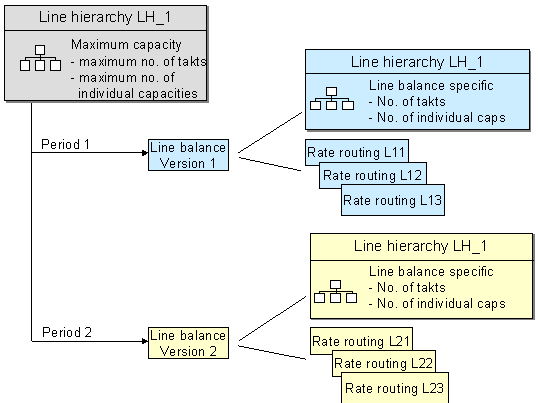
work content of a takt or a line segment can be carried out by the individual capacities available in the time available. In addition you can change the amount of takts and individual capacities in a line segment, which you have defined in the line hierarchy. These adjustments are only valid for the respective version of the line balance. In this way you can adjust the capacity of the production line, which you have designed in the line hierarchy for a maximum load, for every version of the line balance or every period. The following graphic shows the connection between the line hierarchy and the capacity adjustment in the line balance.Structure
Integration