

 Amortization According to LAC and SAC
Use
The amortization function determines the new book value for a position by calculating the net present value on the key date. You can calculate the net present value for the key date according to the Linear Amortized Costs (LAC) method or the Scientific Amortized Costs (SAC) method. The system compares the calculated net present value with the current amortized acquisition value and generates the corresponding interest capitalization flow for the difference. The LAC and SAC values are determined and compared in position currency. The difference to the amortized acquisition value is the write-up or write-down amount in position currency. This is then translated to the valuation currency using the book exchange rate.
The net present value can be calculated using two methods:
The LAC calculation assumes that the positions have a constant annual amortization rate.
The SAC method assumes an exponential amortization rate for the change in value of the positions. It calculates the net present value of the position for the key date by discounting the flows that arise from this position after the key date.
If amortization has been defined for the
position management procedure for a position, the positions are amortized in the following cases:Prerequisites
See also:
Features
Linear Amortized Cost (LAC)
The LAC amortization method values an item at 100% assuming a constant annual amortization of the book price.

whereby:
Da = Duration in days between the last amortization and the current one
Db = Duration in days between the last amortization and final repayment
Scientific Amortized Cost (SAC)
You can only perform the amortization once for each key date using the valuation function.
Calculation
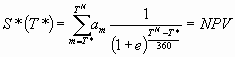
whereby:
a |
= Repayment flows as from date T* |
e |
= Effective interest rate calculated |