
Capacity Checking Based on a Neutral Indicator
The following examples correspond to the three neutral capacity checks. For these examples. The following conditions apply:
Nine pieces of the material can be stored in storage bin 01-01-01. This leaves a remaining capacity of 1 as illustrated below. This capacity check is advantageous if you can stack materials as desired into this storage bin. It could also replace capacity checks 2 and 3 if there are different batches that results in mixed storage.


Important: If you place the same material into the warehouse 5 times, this is not necessarily five separate quants. If storage unit (SU) management is not active in the storage type record, this is generally only an increase in the quantity of a single quant.

The capacity checks in points 2 and 3 only function properly when the SUT check and SU management are active in the storage type record.
Eight full wire baskets can be stored in storage bin 01-01-01. This leaves a remaining capacity of 4. This capacity check is advantageous when the SUTs are next to each other and the materials can be removed one at a time from each container.

Eight pieces can be stored in storage bin 01-01-01 on an E1 pallet. This leaves no remaining capacity for the bin. This is illustrated in the following graphic:

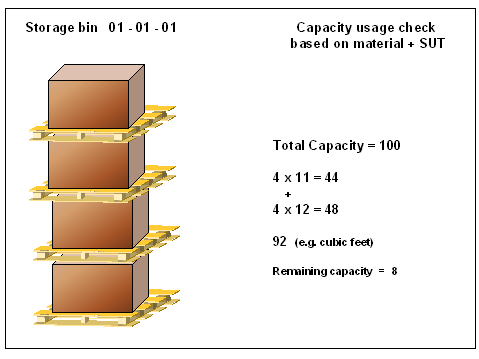
If the material is stored in the bin with one piece per E1 pallet, 4 pallets will fit in the bin (44 + 48) and a remaining capacity of 8 exists as shown in the figure below. This capacity check is advantageous if the pallets are stacked on top of each other and the thickness of the pallet must be taken into consideration.

Before you make the first stock placement, you need to define the type of capacity check and the capacity usage of material and storage unit types. Changes that are made to these parameters afterwards cause automatic changes to storage bins, storage units and quants. If you make changes in the operational system, you must run report RLS10200 to adjust the occupied capacities for bins, storage units and quants.
For more information, see the online documentation for this report.