 Basics
Basics
The data basis for the standard analyses is provided by special statistics files, known as the information structures.
This is illustrated in the following diagram.
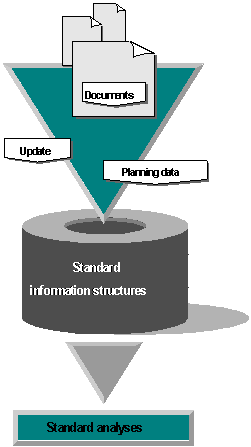
An information structure defines
a group containing information that is used for the aggregation and subsequent evaluation of data from the operative application.You can find information about which standard analyses are available in the individual information systems in
Standard Analyses of the Information Systems.List Types: Initial Lists and Drilldown Lists
You can view the following types of lists in a standard analysis:
The initial list provides an overview of the characteristic values for the key figures, in accordance with the selection criteria you make beforehand.
A drilldown list shows a particular characteristic value, for instance, in detail. There are several drilldown options, depending upon the analysis selected.

Drilldown Function
The drilldown function allows you view the data that is shown in the list in more detail, and thus vary the level of detail. A drilldown can be based on two criteria:

The functionality of the hierarchy drilldown is not yet available in Inventory Controlling and the Plant Maintenance Information System. Further information can be found in the Release Infos.
The following hierarchies are available in the individual information systems:
Both types of drilldown can be used in combination with one another.
Additional Functions for Editing Lists
A variety of additional functions are available for all list levels that are created by a drilldown:
You can illustrate all of these results graphically.
In the standard analyses ‘event’ and ‘production order’ in the Shop Floor Information System, you can call up a Gantt diagram and an input/output diagram.
You can also access master data and document information from the respective operative application.
Return to:
Standard analysis