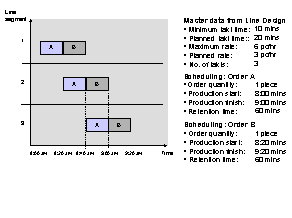
Example 1 for Takt-Based Scheduling
This example shows the scheduling of two planned orders each with an order quantity of 1. In this example, the maximum rate of the production line is not used as the basis of takt-based scheduling and is therefore not taken into account. Only the planned production rate of the current period is relevant for scheduling.
Master data from line design
The production line consists of three line segments each with one takt. Therefore, each product flows through 3 takts.
A maximum production rate of 6 pieces per hour is specified for the line hierarchy.
The planned production rate that was determined for the current period in line balancing is 3 pieces per hour. This means that in line segment 1, a material is added to the production line every 20 minutes. As the speed of the line is also determined by the planned production rate, a material can be processed for 20 minutes in each takt.
Scheduling in Sequencing
Both orders are for 1 piece and, therefore, remain on the production line for a total of 60 minutes. This retention time (RT) is calculated according to the following formula:
RT = (3 takts - 1) * 20 mins +1 * 20 mins = 60 mins