Roadmap Types 

Definition

The term "Roadmap type" refers to the type of implementation you are carrying out. Usually, the Standard Implementation Roadmap is used, with the "flavor" R/3. However, you can combine certain Roadmap types with flavors as shown in the graphic below.
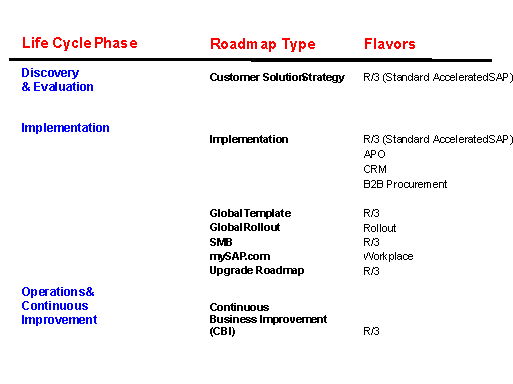
Use

You can install one or a combination of the following Roadmaps:

  1. Standard Implementation Roadmap
    The Standard Implementation Roadmap is a comprehensive methodology containing the five phases of standard AcceleratedSAP, with all the steps needed to implement the R/3 System. The individual phases are called Project Preparation, Business Blueprint, Final Preparation, and Go Live and Support.
  2. Upgrade Roadmap
    A Roadmap built specifically for Customizing activities that are required if you want to continue to use the same functions as before in your business application components after a system or release upgrade. Note that, in contrast to Delta Customizing (which covers functionality from a new SAP release), Upgrade Customizing covers changes to functions already used in live systems.
  3. Global ASAP "Template" Roadmap
    The Global ASAP Roadmap is tailored to companies that are implementing on a worldwide scale. The global implementation program is divided into global and local activities, and also into studies, projects and the operation of production systems. The basic concept of Global ASAP is to map all corporate activities into a "global reference system", called a Global Template. This system is the sum of all enterprise-specific configuration, models, and so on, which represents a single source of reference for productive systems on the global and local levels (individual companies and plants).
  4. Small and Medium Businesses Roadmap
    The SMB Roadmap type is used for smaller companies which require a rapid, turnkey style of SAP implementation, and which want to adopt the best business practices of SAP. The key differences from the standard ASAP Roadmap is that the Project Preparation and Blueprinting Phases occur in the Sales Cycle. SAP consultants perform the configuration with minimal, focussed, involvement from the customer. The starting point of the configuration is a pre-configured, documented, industry-specific system that is then tailored to a company's unique business requirements.
  5. Customer Solution Strategy (CSS) Roadmap
    This new Roadmap focuses on introducing and communicating the concepts of ValueSAP, in particular the procedure for defining business solutions during the Discovery and Evaluation phase. The business strategy uses KPI concepts and benchmarking activities, as well as the SAP Solution Maps. This analysis includes modeling the strategic organizational structure, setting the functional scope, defining key business processes and developing scenarios and solution maps, the aim being to optimize the system architecture in support of business needs.
  6. Continuous Business Improvement (CBI)
    This Roadmap represents the third phase of ValueSAP, used after you have an implemented system in place. The CBI approach employs a Roadmap with a four-phase assessment process, which delivers a blueprint highlighting areas for improvement, and drives action plans, goals and measurement for success using Key Performance Indicators (KPIs).
  7. mySAP.com Roadmap
    This is a five-phase Roadmap intended to help you implement the my.SAP Workplace for Release 2.0. Workplace-specific deliverables include a Project Plan, scoping documents, technical documents and a configuration guide. A role spreadsheet helps to identify requirements.

The contents of this help file pertain to all Roadmap types and are not limited to the one you installed.