 Valuation Principles and Valuation Classes
Valuation Principles and Valuation Classes
When you implement Treasury Management, you define the valuation principles and valuation classes you want to use for valuation. You do this in Customizing for Basic Functions by choosing Define One-Step Valuation Principles and Define Two-Step Valuation Principles, and Define Valuation Classes.
1. Valuation principles
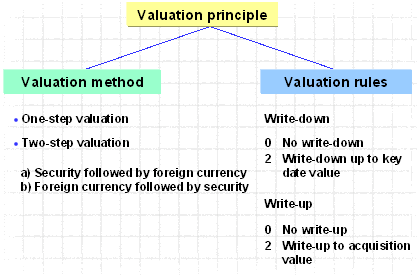
The valuation principles define the rules according to which you perform valuation. A valuation principle comprises the valuation method and the rules that define how to write up and write down the foreign currency and the security.
The valuation methods are as follows:
a.
b.
Two-Step Valuation Methodsi. Two-step method (first security, then foreign currency)
ii. Two-step method (first foreign currency, then security)
When you have chosen the valuation method, you define the rules you want to use to determine the new book value when comparing the last book value, the key date value and the acquisition value. You then write it up/down accordingly.
When you use the one-step method, you define how to perform write-ups/write-downs to the total amount in local currency.
When you use the two-step methods, there is a difference between the write-up/write-down amount for the security price and for the exchange rate.
The graphic below provides an overview of the valuation principle and shows you which write-up/write-down rules you can define.
Overview: Valuation principle
Valuation class
You combine a valuation category and a valuation principle in the valuation class. The valuation category determines the type of position management that is used and how the valuation groups are formed. The valuation principle contains the method and the rules according to which you perform valuation for a valuation group.
The valuation class includes all the
Position Management and valuation information. The only other decision you have to make elsewhere is whether or not to flag the portfolio indicator.
Overview: Valuation class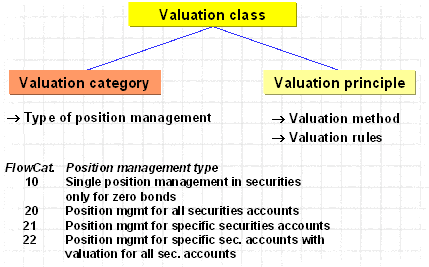
Valuation classes in the securities area
You have to assign a valuation class at company code and securities account level to each position in the position indicator.
See also:
Position indicators
2.
For more information on valuation, see the chapter on Basic Functions in the Implementation Guide (IMG), in particular, Define Valuation Classes.