
Overview
The SAP Text Matrix graphics program generates a text window in which the user can scroll (vertically and horizontally). This program allows the programmer to offer text displays (such as help windows) to the online user.
A typical text window looks as shown in the following figure.
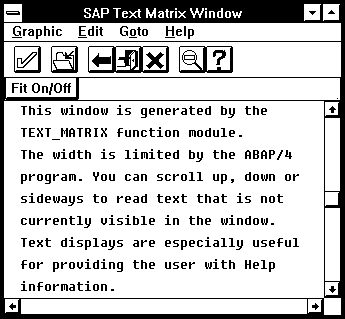
You can call SAP Text Matrix from an ABAP program, and generate a text window at the user's workstation screen. Your program specifies the text to be displayed and calls the following function module:
The TEXT_MATRIX function module actually implements text windows by a call to SAP Pushbutton Graphics. In contrast to pushbutton pads, however, text windows offer the online user no functionality other than scrolling.
Your program can also determine the size of the display window.
Programming Interactive Applications
If your ABAP program allows the online user to open multiple windows or enter data with the mouse or keyboard, the application is interactive.
You are provided with two mechanisms for controlling the interaction between ABAP program and online user:
Using graphics function modules with dialog parameters STAT, M_TYP, PWDID, SUPER, WINID and RWNID)
Using graphics function modules with dialog parameters STAT, PWDID, SUPER, and WINID)
plus utility function modules :
For new programs, you should use only the second mechanism, graphics function modules with the utility function modules.

Do not use both mechanisms together in a program.
For more information, see
Programming Interactive Applications.You can also change the standard graphics display and define additional graphics functions for interactive users. This means when you call up SAP Text Matrix, it appears with changed or extra menu names or pushbuttons.
For more information, see the section
Changing the Standard Graphics Display. To define additional functions, call the appropriate function module before you call the SAP Text Matrix function module.If your ABAP program calls GRAPH_ACTION, it must also use the CUA_ID and B_TYP parameters (when calling TEXT_MATRIX) in order to learn when the user has selected these additional functions.