Interest Rate Swap

Interest Rate Swap
Use
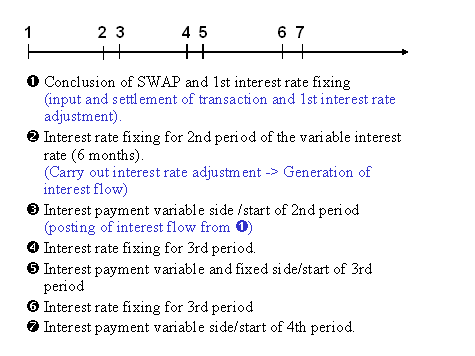
Interest rate swaps are swap transactions that usually have a term of over a year. They are effected on the basis of different interest rates in the same currency. You can represent the most common variants such as the swap of fixed interest rates against variable interest rates or variable interest rates against each other in the system.
Activities
 pushbutton to take Nominal amount increases or decreases from the 'incoming interest' side and copy them to the 'outgoing interest side' and vice versa.
 Example:
A company finances an existing investment with a fixed interest loan at 6.5%. The company treasurer expects falling interest rates and, therefore, agrees an interest rate swap with a bank. From this interest rate swap, the company receives a fixed interest yield of 7.25% and pays a variable rate of 6-M-EURIBOR.
The company, therefore, has the following interest rate costs:
Þ This results in interest expenditure of 6M-EURIBOR - 0.75%