 Process Flow: Deployment
Process Flow: Deployment
Purpose
In the deployment situation illustrated here, production quantities are fixed (Produce-to-stock) and shipments between the manufacturing plants and the distribution centers are based on on-hand stocks, demands, sourcing, and transportation. The shipments are grouped into truck loads according to the destinations, dates, loads, etc.
Process Flow
The following diagram displays the business flow and data flow:
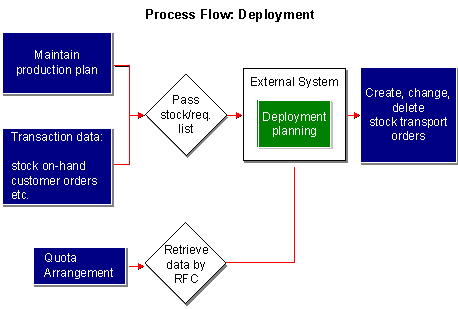
The process is similar to distribution planning. The stock/requirements lists in the manufacturing plant contain information on the current production situation. The external system obtains the detailed production plans and stock situations at the manufacturing plants from the stock/requirments lists and continues to update after each data exchange. The external system also collects demand information at the distribution centers by extracting the customer orders from the stock/requirements list.
It is the emphasis on transportation that distinguishes deployment from distribution planning. For deployment, the external system may need more information from material master, it may have to define plant transportation data on its own, or it may have to extract information (such as location master) defined in R/3 using part of ‘Transportation Interface’ delivered with release 3.1G.
Result
When loads have been built optimally, data is sent back to R/3 and stock transport orders must be created with the external IDs supplied by the external system. By using the external ID numbers, the external system can track and modify each load if necessary. The create/change/delete dialogs are all realized by using ALE message type RECSHP.