Adjustment of Document Data on the Basis of the Worklist
Adjustment of Document Data on the Basis of the Worklist
Purpose
The worklists generated are the basis for further processing in the individual applications. The following transactions exist for this in the individual areas:
Application area |
Transaction |
Description |
Purchase order |
MEI1, MEI2 |
Automatic document adjustment/single documents |
Pricing |
WVN0, MEI2 |
Generation of the pricing worklist |
Investment buying |
WLB1 |
Determination of investment buying requirements |
POS outbound |
WPMU |
Change message |

Transaction MEI2 enables purchase orders and pricing documents to be processed at the same time (sequentially).
SAP recommends that programs that are run for subsequent processing be scheduled periodically in the background after the worklists are generated.
Process Flow
As far as subsequent processing is concerned, a distinction is made between the following cases:
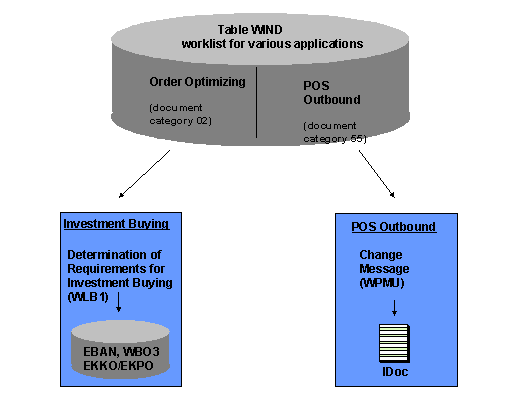
In these application areas, subsequent processing is based on the worklist alone. The POS Outbound application uses the worklist to generate new documents that contain the changes (IDoc with changed conditions).
When requirements are determined for investment buying, the system reads change pointers from table WIND. These change pointers refer to article price increases Using the data available, the system works out whether the return on investment is high enough for it to be worthwhile procuring articles before they are actually required. If it is, purchase requisitions (table EBAN) or order items (table EKKO/EKPO) are generated. Log entries for analysis (table WBO3) are also generated.
For further information, see
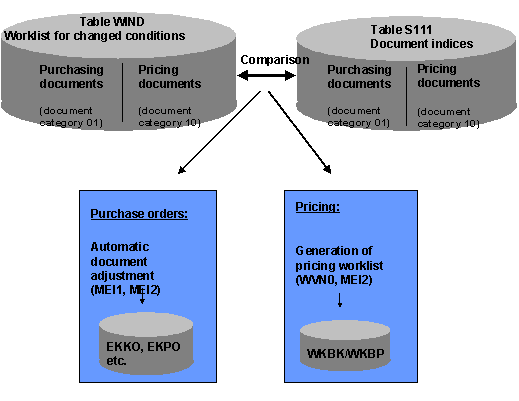
In these two application areas, the system makes use of document indices in addition to the worklist. The system compares the worklist with the document indices. This leads to existing purchasing documents being changed, while in Pricing new documents (pricing documents in the pricing worklist) are generated.
For further information, see
 Automatic Document Adjustment when Conditions Change.