 Structure of an Export File
Definition
The export file consists of a sequence of bytes that can also be considered to be a sequence of commands in machine language. These commands consist of:
Operator codes
Operator parameters (operands)
Structure
Operator Code, Operator Parameter, and Operand
The first two bytes in a command contain the operator code . Several bytes follow the operator code and these form the operator parameter . The operator parameters represent the operands . However, there are also operators without operands.
 Example
The BOT operator ( B egin o perator for t able) has two operands. The first operand is 10 bytes long, and the second is 6 bytes long. The first operand contains the table name, and the second operand contains the line number of the table entry.
Structure
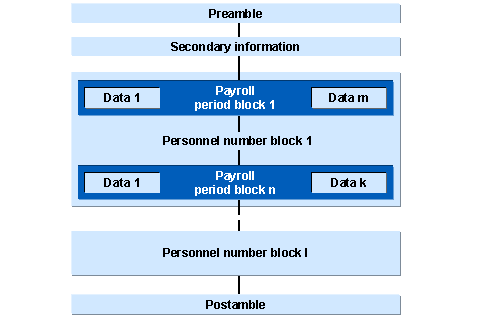
An export file begins with a start sequence, the preamble . The preamble is followed by personnel numbers . The postamble constitutes the end sequence.
Preamble
The preamble shows the start of the export file. The operands in the preamble contain information on the export program (for example, creation date). The export file always starts with a preamble.
Personnel number
Each personnel number begins with a BOP operator ( b egin o perator for p ersonnel number). The payroll period that the BPE operator ( b egin operator pe riod) introduces follows. Within the payroll periods there is the actual export data, which is grouped together in blocks. The EPE operator ( e nd operator pe rsonnel number) forms the end of the payroll period. The EOP operator ( e nd o perator for p ersonnel number) is at the end of the personnel number.
Postamble
The postamble is at the end of the export file. The postamble begins with the BPO operator ( b egin operator for po stamble), followed by an operand. The EPO ( e nd operator for po stamble) operator forms the end of the postamble.

For more information on operators, see
Operators for Export/Import Files
.
See also: