Demand Characteristics
The aim of determining a stocking indicator based on the demand is to be able to satisfy the demand within a certain period (future-oriented) through systematic stocking.
To determine the stocking indicator by means of demands, first select the relevant checkbox on the selection screen.

The Replenishment Lead Time per part and the Demand Visibility Horizon are required as input parameters. The demand visibility horizon specifies how long in the future demands exist or are to be fulfilled. You can determine the demand visibility horizon manually or automatically. The parameter is maintained in calendar days in the enhanced material master view:
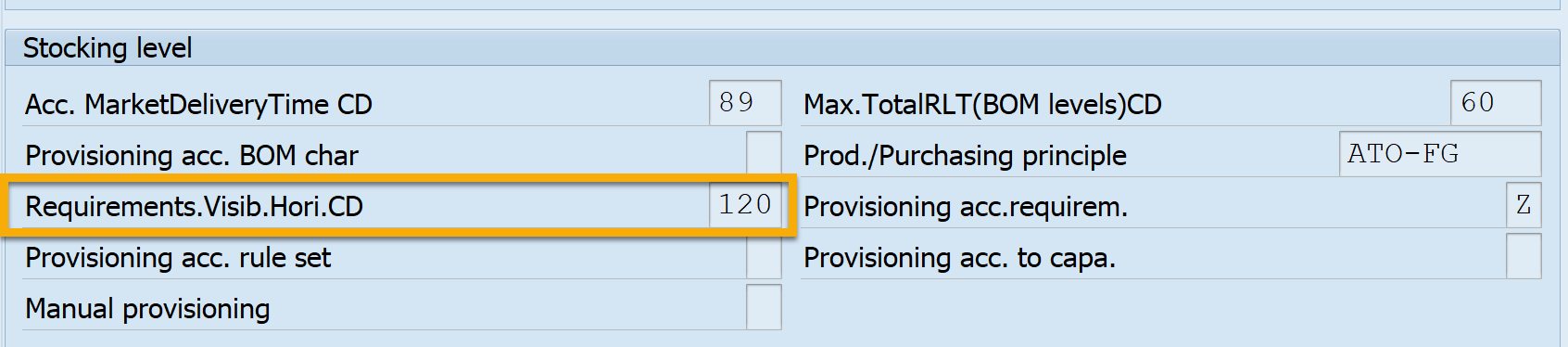
You make the settings for automatic determination in section XMD. To be able to determine and use the demand visibility horizon, you must have made the relevant settings for the XMD tool and have executed the corresponding XMD jobs in advance. For more information, see Stock/Requirements List in the Configuration Guide for the comprehensive functions.
Depending on which criterion is used to make the stocking decision, a different identification code is assigned for the stocking indicator.
The following stocking indicators are available:
- Q – Stocking according to demand visibility horizon (multi level)
- R – Stocking according to demand visibility horizon (single level)
- Y – Stocking according to demand visibility horizon (single + multi level)
- Z – No stocking since demand visibility horizon > RLT
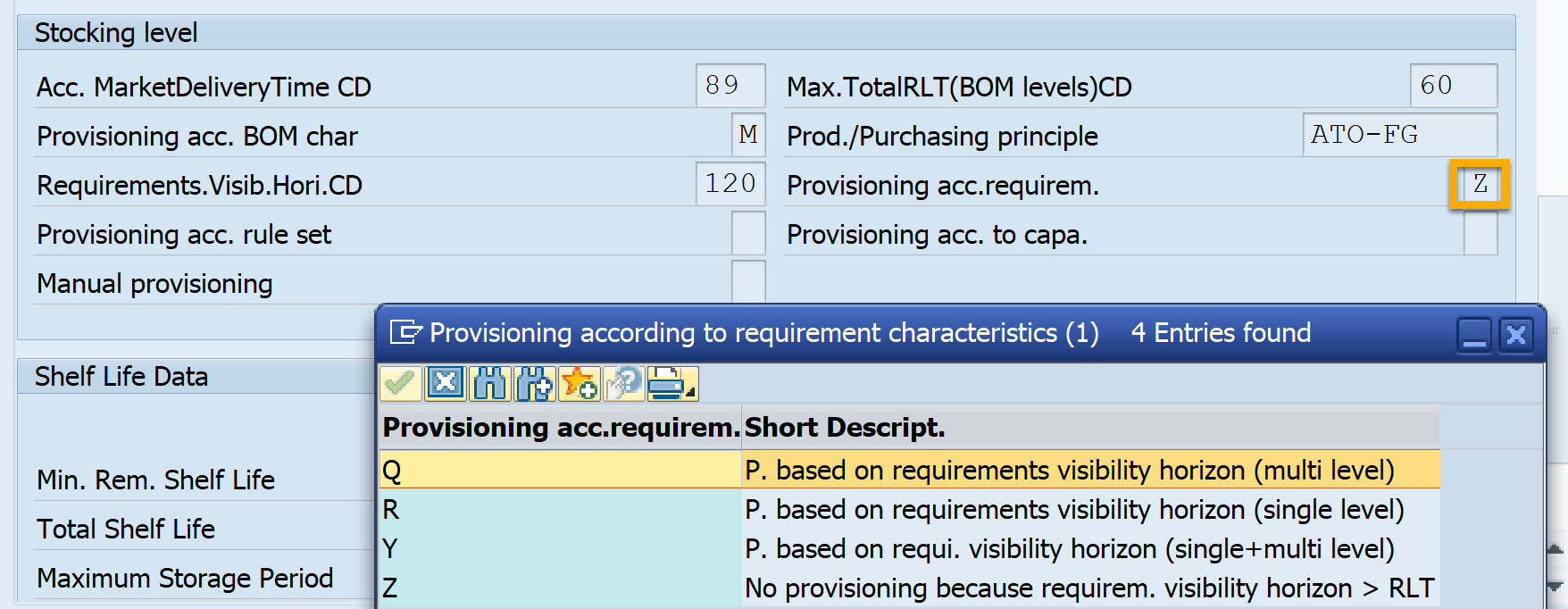
The stock level monitor checks whether and when the single-level or cumulated replenishment lead times exceed the demand visibility horizon, and sets a stocking indicator accordingly. The stocking indicators are divided into "single level": Stocking according to the single-level RLT and "multi level": Stocking according to the cumulated RLT.
The following examples explain the inspection logic for the analysis of one or more materials according to demand.