Message Type
Use
A message type comprises a data type that describes the structure of a message. At the following points of SAP Exchange Infrastructure you can refer to the message to be exchanged at runtime by using the message type:

For technical reasons a data type is not sufficient to describe the instance of a message. In XML schema, data types are defined as abstract types that are not yet fixed to an element. You can only describe an instance of a message when you have specified a data type as an element type. Therefore, a message type defines the root element of a message.
A message type does not define the direction of the message exchange, in other words, whether it is a request or a response. In exceptional cases you can use the same message type for both the request and the response message.
Prerequisites
You have already created a data type that you want to reference from your message type. For more information see the section Prerequisites in
Introduction to Interface Development.Features
A message type:

You have defined a message type
<?xml version="1.0" encoding="utf-8" ?>
<ns1:GreetingRes xmlns:ns1="http://sap.com/xi/myExample"
xmlns:xsi="http://www.w3.org/2001/XMLSchema-instance">
Hello Mrs. Miller
</ns1:GreetingRes>
You can specify how a message type is used in more detail in Description.
Activities
Example
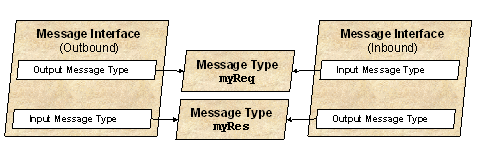
In the example below, two message interfaces each use the same message type for the request message and the response message: